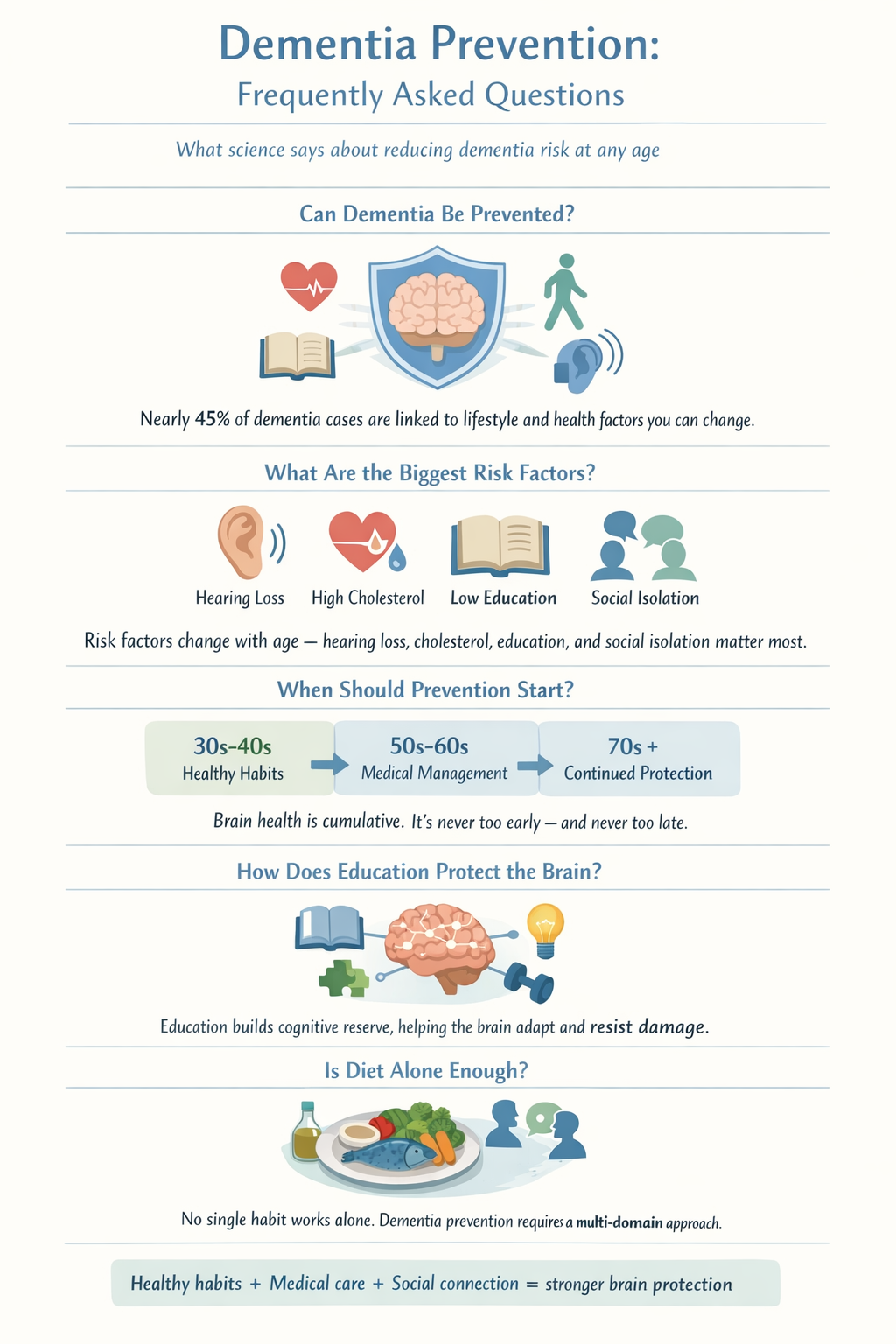
People who used to believe that dementia is just a normal part of getting older, that it will happen if you live long enough. This can be feel terrifying especially when you are concerned about your own brain or your loved ones. But the new examination gives a more confident view. The 2024 Lancet Commission report states that nearly half (45%) of dementia cases are linked to risk factors we can change. While dementia is not always avoidable, it is certainly not an inevitable part of aging.
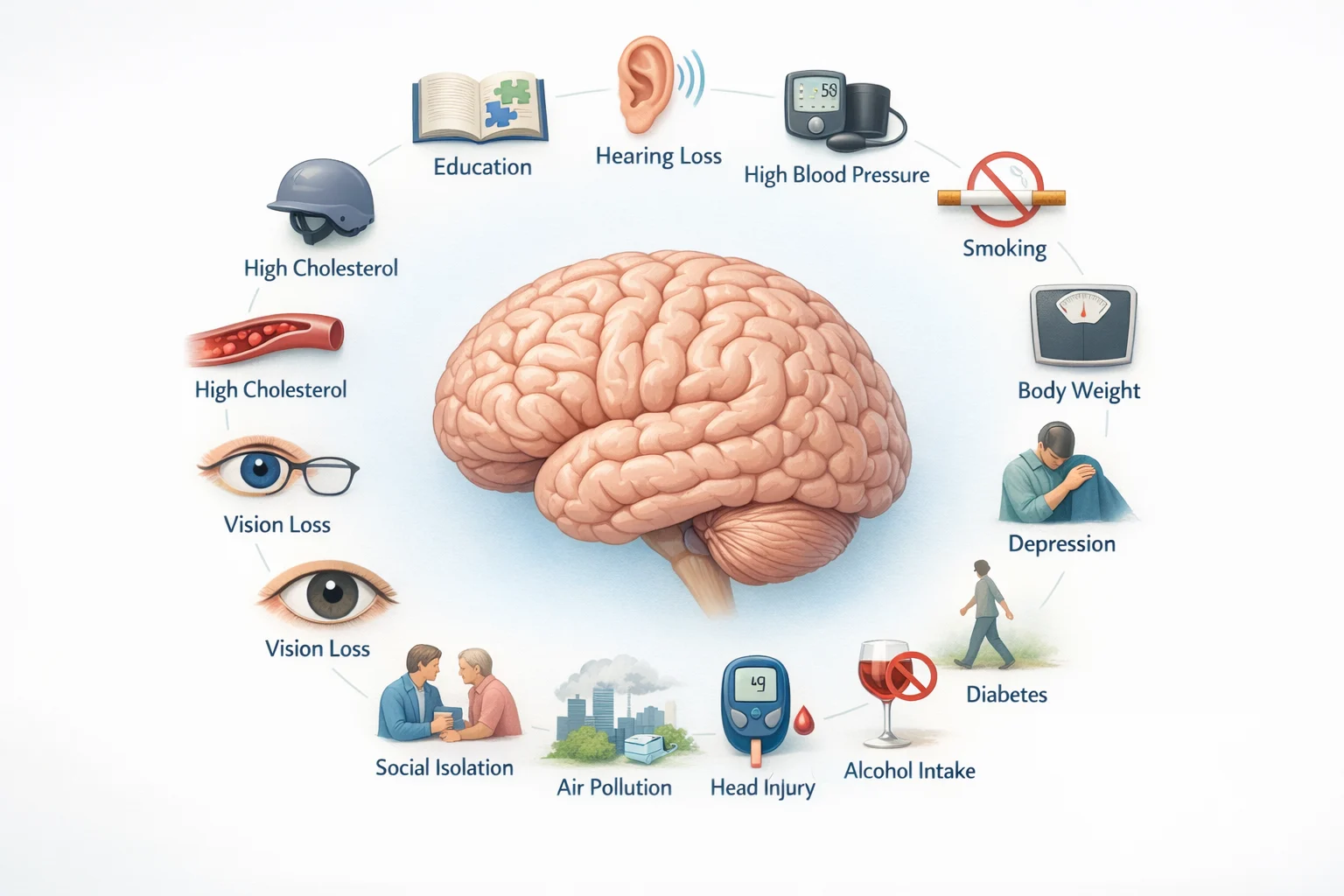
Specialists identify 14 modifiable dementia risk factors—factors like lifestyle, environment and healthcare that can affect your brain over time. Making small fluctuations early can help defend your brain more easily.
Preventing dementia is about knowing what you can control and taking steps to keep your brain strong not about anxiety or opportunities.
Key Takeaways
-
Dementia is not inevitable. Nearly half of cases are linked to factors we can influence.
-
Small changes matter. Modifiable risks mean progress over time, not perfection.
-
Brain health starts early. Habits formed years before symptoms appear shape future risk.
-
Lifestyle protects the brain. Movement, nutrition, sleep, learning, and social connection all help.
-
Prevention lowers risk, not guarantees outcomes. Many small healthy choices together make a real difference.
What Does “Modifiable” Really Mean?
When professionals say a risk factor is “adjustable,” then it doesn’t mean you can get rid of it easily. It means you can transform it a little through your habits, your doctor’s care or your surroundings. Things like your genetic factor, age and luck still matter so nothing can fully inhibit difficulties. Actually keeping your brain fit isn’t about being perfect—small, regular steps matter more than one big change. Simple habits over time can protect your mind for many years. Knowing to adjustable risks helps you emphasize doing better, not feeling anxious.
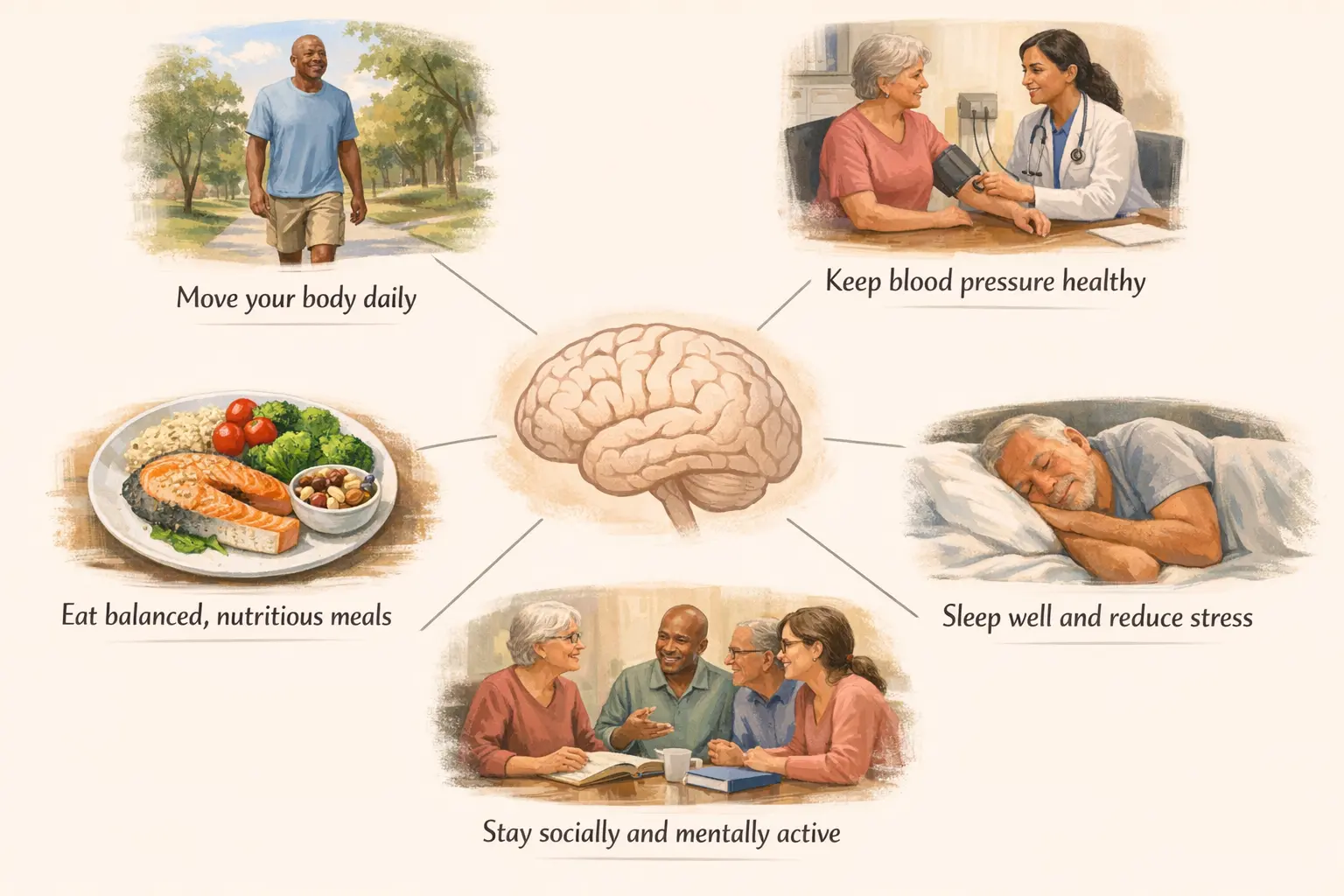
Ways to help your brain stay healthy:
- Walk more and move your body
- Retain your blood pressure and well-being in check
- Eat healthy and stable meals
- Stay in touch with groups and keep education
- Sleep well and manage anxiety
Emphasis on systematic lifestyle changes for brain health.
The 14 Modifiable Dementia Risk Factors
-
Education
Education helps build what some experts call “cognitive reserve,” the brain’s capacity to cope with stress and remain strong. Learning more over time makes the brain better at managing later in life. Education doesn’t end after school. Simple actions like analyzing, doing puzzles, learning a new language, singing or trying a new hobby keep the brain active. For those looking to expand their knowledge while supporting others, reading remains one of the best tools; you can find excellent recommendations in this list of the best dementia books for caregivers. Staying mentally hectic helps memory, emphasis and problem-solving.
-
Hearing Loss
If hearing loss is not cured then it can make the brain less energetic and cause people to devote less time to others which may affect thinking and memory. When the brain works hard to hear, it has less energy to remember things or resolve difficulties. Talking with families, joining social activities, listening carefully and even small steps like lowering the volume on headphones or avoiding loud places can support the brain.
-
Hypertension
High blood pressure can damage blood vessels including those that go to your brain. Over time, this can decrease blood flow and increase chance of developing vascular dementia. You can shield your brain by keeping your blood pressure under control. This means eating less salt or staying energetic, maintaining a healthy weight, managing anxiety or limiting alcohol, not smoking and taking any treatments your physician prescribes.
-
Smoking
Smoking puts risky chemicals into your body that can upset your brain and blood vessels over time. The harm accumulates gradually but leaving at any age, that can still benefit your mind and well-being. Doctors say it’s really essential to keep trying even if you slip up—each effort to quit helps your body heal. Ending smoking also benefits your heart and lungs and helps your body and mind recover in the long run.
-
Body Weight (BMI)
Being overweight especially in middle age can upset the brain by causing trauma and infection in the body. The Lancet report says it’s more significant to be healthy than to look a certain way. Keeping a healthy weight with good food, regular workouts and fit daily habits helps protect your brain. Extra weight can also increase the risk of diabetes, high blood pressure and heart problems which can affect thinking.
-
Depression
Your mental health affects your brain’s well-being. Feeling unhappy can change your brain, affect stress levels and make you less interested in talking to people or doing activities which may increase the threat of dementia over time. Seeking treatment for depression through therapy or evidence-based medical care , taking medication if needed, staying active with friends, maintaining daily routines and addressing emotions early can help keep your brain strong.
-
-
Physical Inactivity
-
A doctor said, “Sitting too much is like smoking.” Moving your body is good for your brain. It helps blood flow, keeps your body working well and lowers swelling. Any movement helps, not just hard work out. Walking, stretching, cultivation or doing tasks all count. The most significant thing is to move frequently every single day even a little bit.
-
Diabetes
Type 2 diabetes and insulin resistance can make your brain age earlier because too much sugar in the blood can hurt blood vessels and nerves even in the brain. This can make retention and sophistication harder over time. The good news is that strong habits can make a big difference. Intake plenty of fruits, vegetables, whole grains and lean proteins, staying active with regular exercise, keeping a healthy weight, reducing tension and getting enough sleep all protect your brain.
-
Alcohol Intake
The 2024 advice says people should drink less alcohol which keeping it under 10 drinks a week. Excessive intake can harm the brain, leading to memory and thinking problems. This is about fitness, not right or wrong. Even cutting down a little, step by step can help protect your brain, keeping your memory, focus and thinking skills sharper as you get older.
-
Traumatic Brain Injury (TBI)
Getting hit on the skull many times even with minor damage that can increase the chance of dementia later in life. Follow simple safety steps just to protect your brain,: wear a helmet when biking or playing sports, use a seat belt in a car, avoid falls at home and notice warning signs like misperceptions, faintness or memory glitches. Being cautious, knowing the dangers and acting early in daily life, at work or during activities can help keep your brain healthy over time.
-
Air Pollution
Air pollution can be harmful for brain but people often forget about it. Tiny particles from cars, workshops and smoke can get into your blood and slowly hurt the brain. You can’t control all the air around you but you can do some things to stay safer. Use an air filter at home, avoid roads, keep windows locked on dirty-air days and support clean-air programs. These minor steps can help shield your brain over time.
-
Social Isolation
Your brain stays healthy when you spend a lot of time with other people. Conversation, collecting, sharing, distributing, strengthening your memory and thinking. Being alone a lot can make your brain weaker and raise the threat of dementia. Seeing family and friends, joining groups, assisting others or calling people often can help. Being with others is an easy way to keep your mind strong.
-
Vision Loss
When your eyesight worsens, it can become harder to do everyday activities and spend time with others, which can affect your memory. Getting consistent eye check-ups, wearing glasses when needed, and treating eye problems can help. Taking care of your eyes — including supportive approaches like Chinese herbs for eyesight improvement — helps you stay independent, enjoy hobbies, read comfortably, and stay engaged in conversations with others.
-
High LDL Cholesterol
High LDL, or “bad” cholesterol can cause a sticky buildup in blood vessels. This makes it harder for blood to spread to the brain which can really hurt brain cells over time or increase the danger of memory complications and Alzheimer’s disease. By Keeping cholesterol under control, you helps both your heart and your brain. Managing cholesterol through the American Heart Association guidelines protects both the heart and the brain.
Conclusion: Prevention Is About Probability, Not about Perfection
In conclusion, preventing dementia is about lowering your risk, not being perfect. The Lancet dementia report 2024 shows that nothing can guarantee your brain’s health, the choices you make now can help your brain in the long run. No single thing like eating well, exercising, staying social or keeping your mind active can stop dementia on its own. If you or a loved one needs help staying on track with these healthy habits, Home Health Care Seattle offers personalized support to manage risk factors and maintain a high quality of life. The minor daily steps add up, and it’s never too late to start protecting your mind. Dementia starts long before indications and so can prevention.
Dementia Prevention: Frequently Asked Questions
1. Is it really possible to prevent dementia?
While there is no 100% guarantee, the 2024 Lancet Commission report states that nearly 45% of dementia cases are linked to 14 modifiable risk factors. By managing your lifestyle, environment, and health conditions, you can significantly lower your probability of developing the condition or delay its onset.
2. What is the most significant risk factor for dementia?
The most significant modifiable risk factor varies by life stage. In mid-life, hearing loss and high LDL cholesterol are major contributors, while lower education levels early in life and social isolation in later years play critical roles in brain health and cognitive reserve.
3. At what age should I start focusing on dementia prevention?
It is never too early to start. Brain health is cumulative; habits formed in your 30s and 40s—such as managing blood pressure and staying physically active—shape your risk decades later. However, the Lancet report emphasizes that making changes at any age can still provide significant protection for the brain.
4. How does education help prevent Alzheimer’s and dementia?
Education builds cognitive reserve, which is the brain’s ability to improvise and find alternate ways of getting a job done. A brain with higher cognitive reserve can better withstand the physical damage caused by aging or disease before symptoms of memory loss appear.
5. Can a healthy diet alone stop dementia?
No single factor can stop dementia on its own. Prevention is about a multi-domain approach. While a healthy diet (like the Mediterranean or MIND diet) is essential, it works best when combined with regular exercise, social engagement, and the management of medical conditions like hypertension and diabetes