
An Oasis in home health means providing care that is calm, kind, and concentrated on the patient. It primarily includes ease, respect, and personal attention, all in the patient’s own home. Instead of rushed medical tasks, this method creates a peaceful, supportive care experience that equally supports the body and mind. The word “Oasis” means relief, security, and caring support throughout illness, recovery or old age.
This model centers on the full person, not only their illness. Care is planned around the patient’s everyday life, habits, values and selections. Caregivers communicate softly, stay reliable and respect the patient’s decisions. This supports patients feeling safe, respected and cared for. By combining medical care with emotional support, an Oasis in-home health helps with healing, reduces stress and improves the overall care experience.
How the Oasis Model Is Different from Traditional Home Health Care
While traditional care follows tight schedules, home health care seattle washington utilizes the Oasis model to center on the patient rather than just tasks. By placing greater emphasis on comfort and emotional support, this approach ensures that patients feel calmer and more supported throughout their recovery or long-term illness
Main differences include:
- Traditional care centers on tasks; Oasis care centers on the person
- Traditional visits may feel rushed; Oasis visits move at the patient’s pace
- Traditional care has lots of caregivers; Oasis has the same caregivers
- Emotional support is limited in conventional care; it is key in Oasis
- Patients adjust to the system in traditional care; the system adjusts to the patient
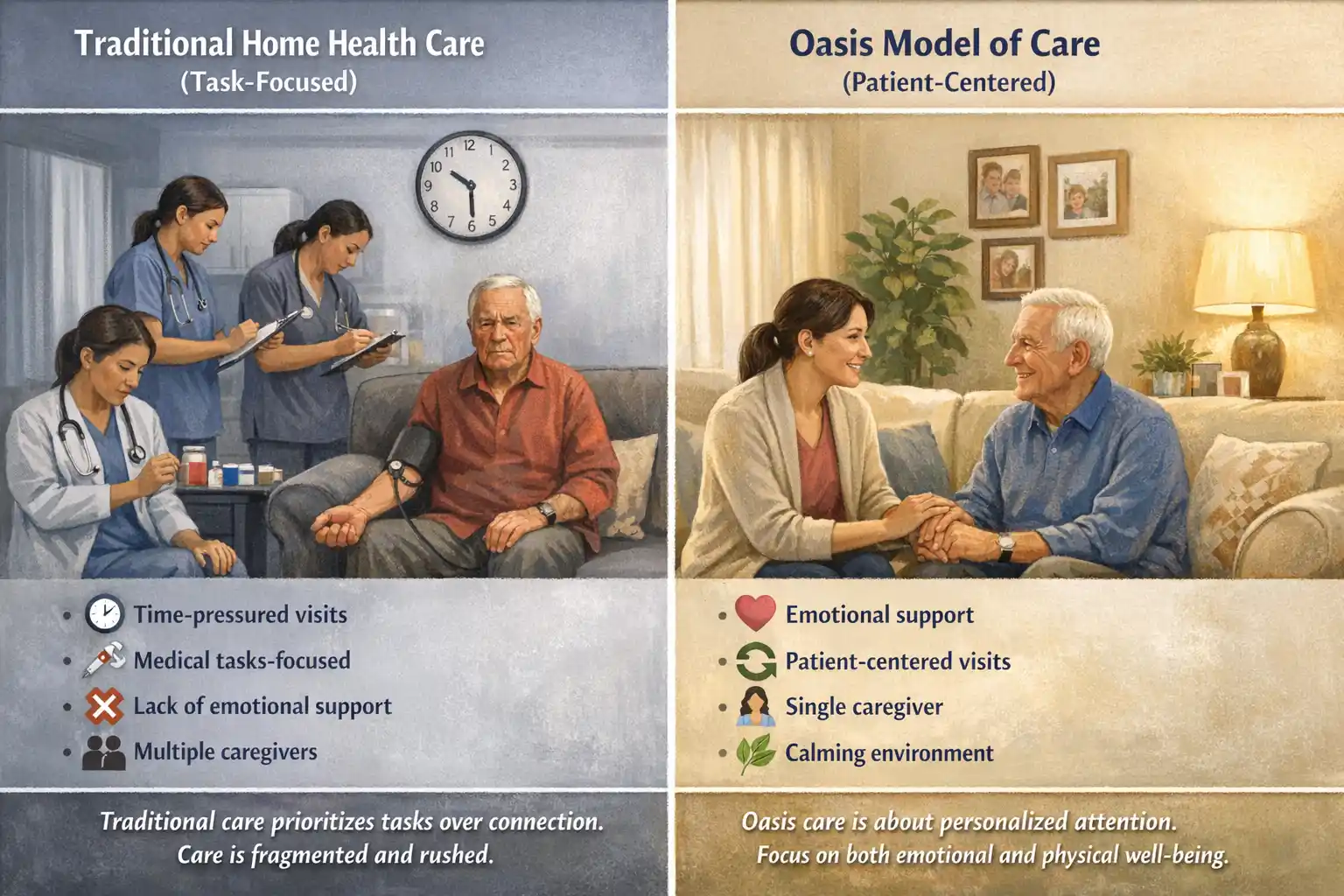
Generally, the Oasis model turns home health care into a caring connection that supports the body and the mind equally.
Benefits of the Oasis Model for Patients and Families
The Oasis model offers care that goes beyond medical treatment. Patients enjoy a calm, caring and personal atmosphere that equally looks after their bodies and feelings. Families and caregivers feel supported, knowing their loved one is treated with respect and attention. This method helps reduce stress, support recovery and build trust among patients, families and caregivers. It cares for everybody involved, not only the patient.
Psychological and Emotional Benefits
Patients in an Oasis-style setting frequently feel safer, calmer and understood. Having familiar routines, reliable caregivers and gentle communication lessens fear, misperception and anxiety, particularly for people with dementia or memory complications. Emotional support is part of the care, displaying that feelings and health are connected. Studies from the National Institutes of Health show that when patients feel emotionally well, they recover faster, manage pain better and have a higher quality of life
Physical and Wellness Benefits
Oasis centers on the whole person, not just medical treatment. It looks at food, movement, sleep and comfort. This helps caregivers notice minor changes early and adjust care quickly. Doing this can help manage symptoms, get people out of the hospital and make it easier to follow treatments. Taking care of everyday needs and long-term health generally makes patients healthier.
Support for Families
Families feel less worried and more at ease with Oasis care. They recognize their loved one is getting kind and cautious attention. Families are included in choices and kept informed which makes them feel involved and valued. This support helps stop caregiver burnout.
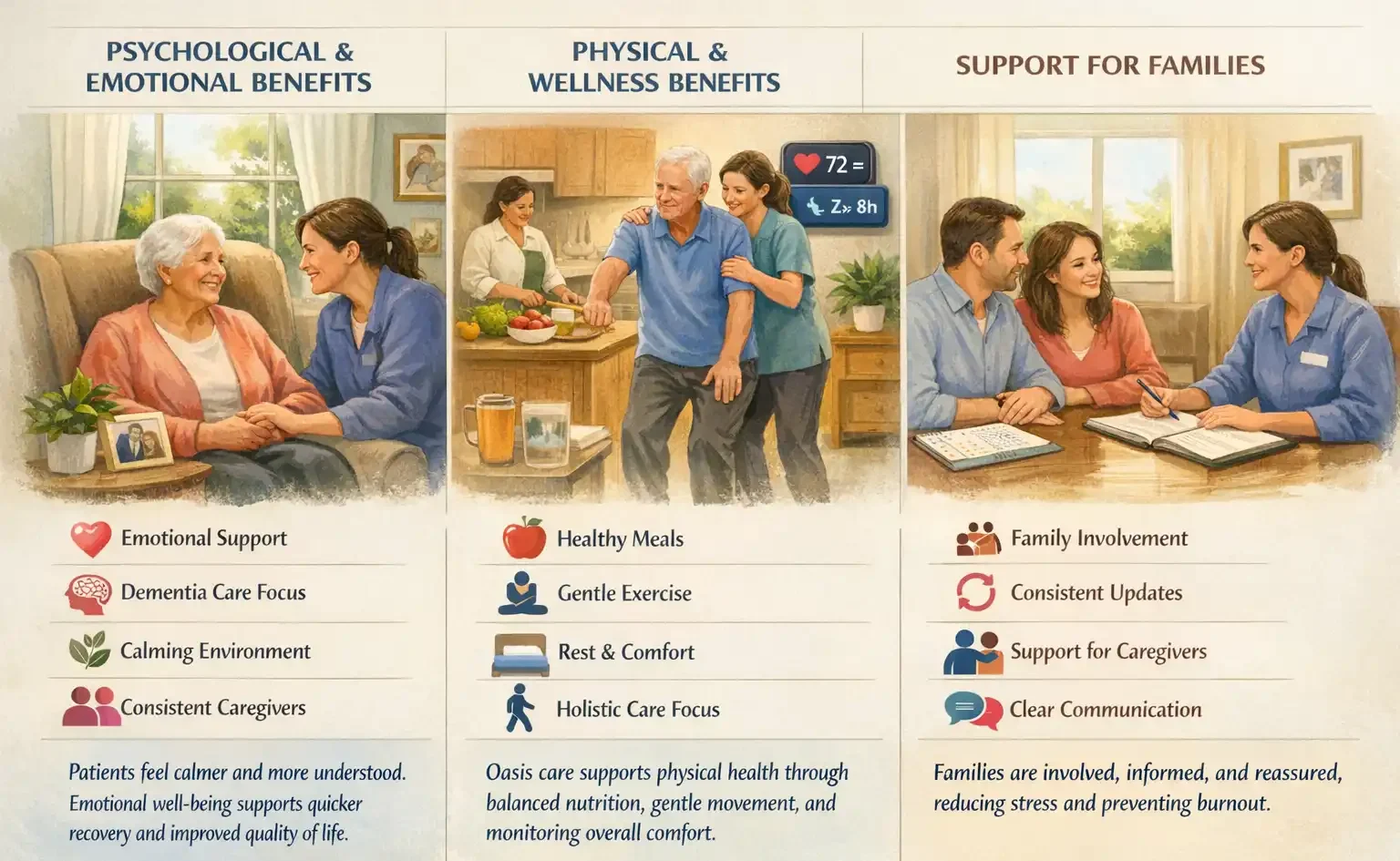
Oasis care takes care of the patient’s body, feelings and family. It supports patients’ recovery, pleases families and improves quality of life. Patients get respectful, comfy care, and families stay connected and informed. Everybody benefits from this type of thoughtful care.
Who Benefits Most from the Oasis in Home Health Model?
The Oasis in Home Health model offers home-based care that centers on the patient. Many people can benefit, but some groups find it most supportive. Older adults and seniors frequently have health complications and may feel vulnerable. If you are navigating care for a loved one and wondering what age is considered a senior citizen, the Oasis model offers them a stable, respectful, and familiar atmosphere, helping them stay independent and feel proud while receiving care.
People with long-standing health complications, like diabetes, heart disease, mobility problems or nerve disorders, also benefit. Oasis care offers steady, caring support that lessens the stress of ongoing medical needs. Patients coming home after surgery or a hospital stay feel safer and more comfortable, as this care combines medical help with reassurance, creating a stress-free recovery.
Families and caregivers also get assistance. Caring for somebody can be tiring and worrying. The Oasis model treats the family as part of the care team. It offers advice and practical support without judgment, reducing stress and helping families feel assured about care.
Key Points:
- Older adults and seniors stay free and respected
- People with long-term conditions get firm support
- Patients recovering from the hospital have smoother transitions
- Families and caregivers get help and less anxiety
This model is not for everybody. People who need very serious or emergency care may prefer a hospital or a specialized facility. The key aim is to match care to each person’s needs.
What Oasis Care Looks Like in Real Life—and How to Find It
Oasis care is more than giving medicine or undertaking tasks. It is about treating people with respect and kindness. Imagine an older person at home who cannot move effortlessly. Instead of various caregivers, the same person visits frequently, learns their routine, talks softly and listens. They do medical tasks well but notice feelings, encourage minor movement and have the home calm. The person feels cared for, not only looked after.
In another example, a family caring for a sick parent gets consistent updates and emotional support. The caregiver adjusts to requirements, carefully plans care and makes the home feel safe rather than worrying. This builds trust and ease for everybody.
To find Oasis-style care, ask questions that show how care is done:
- Do caregivers build actual relations with patients?
- Is care made for every person or the same for all?
- Are feelings, dignity and comfort essential?
- Are families included in care choices?
- Do reviews, coordinator discussions and actions display kindness and center on the patient?
Finding the right provider takes time, but selecting someone who values people, not just tasks, makes a big difference. When care is kind, private and respectful, patients and families feel supported, harmless and understood.
Final Thought
In conclusion, An Oasis in home health is more than only care at home—it is about treating people with kindness and respect. It centers on making patients comfortable, respecting their dignity and supporting their feelings, not just their medical needs. By paying attention to each person’s desires, this method turns home care into a place where care and compassion work together. Families who know this model can make better choices that help their loved ones feel safe, cared for, and supported.
This method shows that care can be equally helpful and personal. When home health feels like an oasis, it offers patients and families a sense of security, respect and emotional support that is frequently missing in consistent care. By caring for the body and the mind equally, An Oasis in home health makes a better way of healing—one that feels human and important.