
The best Games for Senior Citizens depend on what a person likes or what they can do easily. Good selections include board games or card games, puzzles, trivia, movement games or talking games. These activities can be exciting, help seniors spend time with others, or keep their minds active. Seniors who like competition may enjoy chess, checkers or cards.
Those who enjoy group activities may like bingo or trivia. Seniors with limited movement can try seated games, large-print cards or easy matching games. The key goal is to choose games that are easy, comfortable, and enjoyable for everyone.
Why Games Matter for Senior Citizens
Games can add fun and activity to a senior’s day-to-day life. They give older adults something enjoyable to do and help them spend time with family and friends. Simple games can also keep the mind active in an exciting way.
Keep the mind active: Puzzles, cards or word games can help seniors think and solve to simple problems.
Encourage social time: Group games give seniors a chance to talk or laugh and spend time with others.
Create a routine: Playing games habitually gives seniors a fun activity to look forward to.
Build confidence: Learning or finishing a game can help seniors feel involved and confident.
Generally, games are an easy and enjoyable way for seniors to stay active or connected. The best games are those they enjoy and can play easily.
How to Choose the Right Game for a Senior?
Choosing the right game depends on the senior’s preferences and interests.
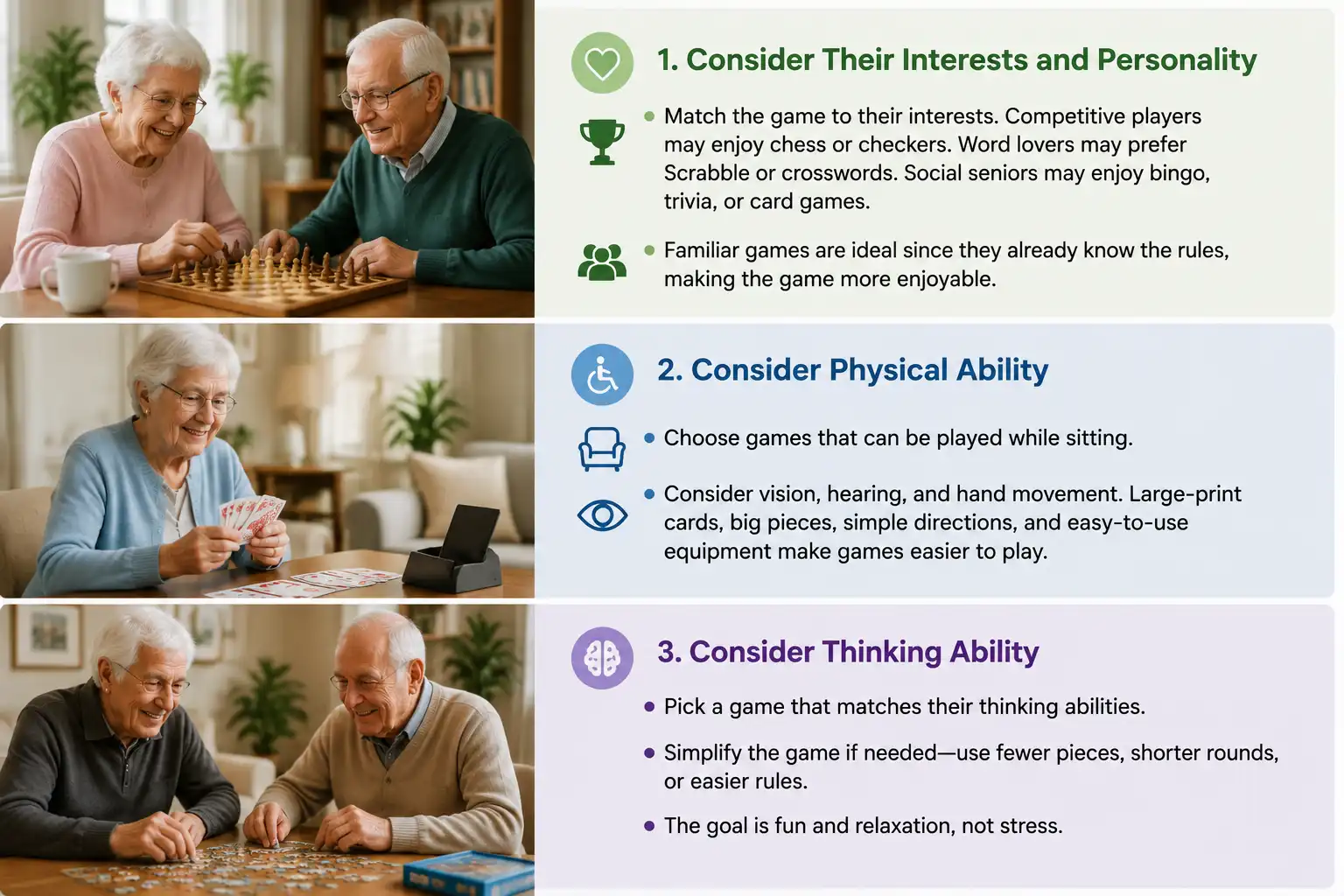
Consider Their Interests and Personality
Think about what the senior likes to do. A person who enjoys competition may like chess, checkers, or backgammon. Someone who likes words may enjoy Scrabble or crossword puzzles. Seniors who enjoy being with others may like bingo or trivia and card games.
Familiar games can be a good option as the senior may already recognise the rules. It can make the game easier and more enjoyable.
Consider Physical Ability
Some games can be played while sitting. These are a good option for seniors who have trouble walking or standing for a long time.
Also consider vision, hearing and hand movement. Large-print cards or big game pieces, simple directions or easy-to-use equipment can make games easier to play.
Consider Thinking Ability
Select a game that matches the senior’s existing abilities. Simple games may be better for somebody who finds complicated rules difficult or stressful. You can also make a game easier when required. Use fewer pieces or play shorter rounds, simplify the rules or allow the senior to play with a partner. The main goal is just to make the game fun and relaxing, not too stressful.
Board Games for Seniors
Board games can be a good option for seniors who enjoy sitting or playing with others. They are an exciting way to spend time with family or friends.
Classic Board Games
Chess is good for seniors who like thinking and planning. Checkers has simpler rules and is good for casual play. Backgammon uses equal strategy and luck. Scrabble is a good option for people who enjoy words.
These games can also help seniors talk and spend time with others while playing.
Easy-to-Learn Games
Some seniors may prefer games with simple rules. Dominoes, matching games, and simple card games are good choices when complex rules aren’t enjoyable.
Family members or caregivers can also simplify games. For example, they can use fewer pieces or tiles or play shorter rounds.
Card Games Seniors Often Enjoy
Card games are easy and exciting for seniors. They can be played alone or with other people. They also take up little space and can be made easier or harder.
Bridge: A social game that supports thinking, memory and planning. It’s good for playing with others.
Rummy: A simple game that involves matching cards and making selections. It can be too exciting or a little competitive.
Solitaire: A good option for seniors who like to play alone or enjoy a quiet activity.
UNO: An easy and colourful game that family members of different ages can play together.
Fish: A simple card game that’s great for families, with children, parents and grandparents.
Card games can help seniors just to talk or laugh or spend time with others. They’re easy to set up. A small table and a deck of cards are typically enough. Seniors can choose a game that matches their skills and comfort level.
Brain Games and Puzzle Activities
Brain games and puzzles can be fun for seniors. They can help seniors stay busy, focused, and mentally active. Seniors can do these activities alone or with family and friends. These games are for fun and are not a treatment for memory complications.
Crossword puzzles: Seniors find answers to simple word clues.
Sudoku: Seniors use numbers to complete a simple puzzle.
Word searches: Seniors discover the hidden words in a group of letters.
Jigsaw puzzles: Seniors put pieces together to create a picture.
Memory games: Matching cards and similar games can be exciting and keep the mind active.
Select easy puzzles if a game feels too hard. Large-print puzzle books can support seniors who have trouble reading small words. These actions are meant for enjoyment or mental activity, not to stop or treat memory loss.
Physical Games for Seniors
Physical games can help seniors move their bodies and have fun. Select out games centred on their movement, balance and comfort. The games can be played indoors or outdoors. Seniors should move gradually and take breaks as needed.
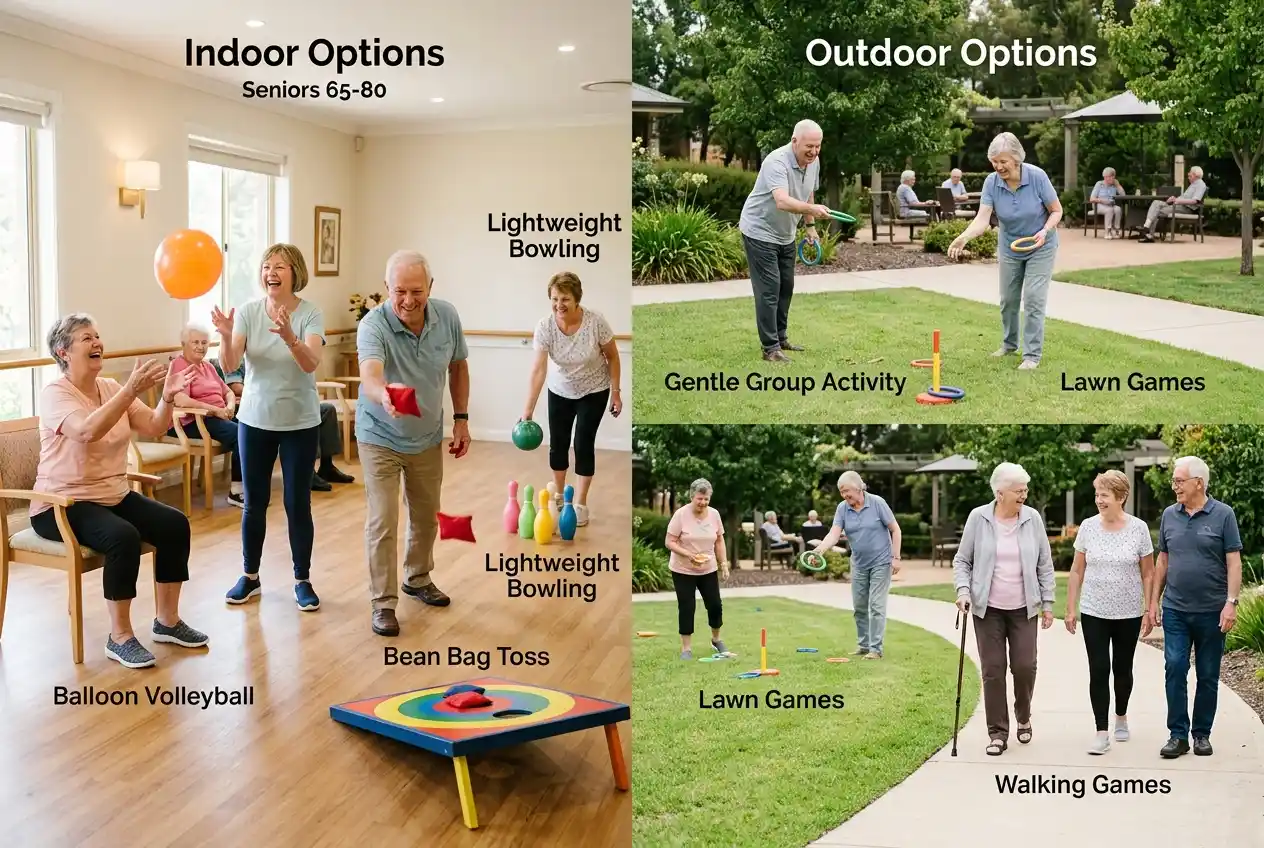
Indoor Options
Balloon volleyball: Play while sitting or standing. Select the position that feels comfy.
Lightweight bowling: Use light balls and pins that are stress-free to use.
Bean bag toss: Throw bean bags at a target placed at an easy distance.
Outdoor Options
Walking games: Play simple games, while taking a short or easy walk.
Lawn games: Pick simple games that involve kind movement.
Gentle group activities: Try easy actions that everybody can enjoy together.
Each time, pick games that match the senior’s ability and mobility. Keep the playing area clear and safe. Seniors should stop and rest if they feel exhausted, dizzy, or uncomfortable.
Games for Seniors With Limited Mobility
Having trouble moving doesn’t mean seniors can’t enjoy to games. Many games can be played while sitting in a chair or wheelchair. Pick the games centred on what the senior likes and what feels easy or comfy for them.
Seated games: Cards or bingo, dominoes, puzzles and trivia can be played while sitting.
Large-print cards: Large cards, boards, and game pieces are easier to pick up and use.
Audio-based games: Trivia, music games, and listening games work well when small pieces are hard to see.
Simple matching activities: Seniors can match cards, pictures, colours, or shapes for an exciting, easy activity.
Conversation games: Storytelling, guessing games, and sharing memories are fun ways to talk and connect with others.
The key aim is inclusion. Change the instructions, game pieces, playing time, or seating position as needed so everyone can join.
Minor changes that can make games easier or more enjoyable. Seniors should feel welcome, comfy or able to play at their own pace.
Games Seniors Can Play With Family Members
Family games benefit seniors by helping them spend a happy time with their loved ones. Simple games can bring grandparents, parents, children, and grandchildren together. The key goal is to talk or laugh, share recollections or enjoy time together.
Trivia games: Ask some simple questions about music or movies, history, hobbies or family memories.
Storytelling games: Take turns telling comic stories or sharing childhood memories.
Family photo guessing games: Show old family pictures and ask who, where or when the photo was taken.
Classic card games: Play easy card games such as Rummy, Go Fish or Uno.
Board games: Choose simple games which seniors and younger family members can enjoy together.
The aim is to have fun together, not to win. These games can bring family members closer and create happy memories.
Games for Seniors in Assisted Living or Senior Communities
The games in senior communities can help residents have fun and spend time with others. The best games are simple, friendly, and easy for everyone to enjoy. Group games should have simple directions and not require much preparation. Residents should be free to play, watch, or join when they feel ready.
Games for groups: Select to games that many residents can play together.
Easy rules: Use simple instructions that are easy to know.
Different levels: Offer easy games and more challenging games.
Friendly participation: Invite residents to join but don’t force them.
Examples:
Bingo: A simple game that can be played while sitting.
Trivia: Ask easy questions about music or movies, history or everyday life.
Group puzzles: Residents can work together to finish a puzzle.
Music games: Guess songs or sing familiar songs together.
A calm, friendly setting can help residents feel comfortable. Giving everybody time and support can make games more exciting.
Final Thoughts
To conclude, selecting the right games for senior citizens means choosing activities that fit their interests or abilities and comfort. Some seniors may enjoy cards and puzzles, while others may prefer trivia, bingo, or simple movement games. For older adults looking to build physical confidence before tackling active or standing games, incorporating leg strengthening exercises for seniors can make movement safer and easier. Minor changes to the rules or game pieces, or difficulty can make games easier and more exciting.
Games are also a great way for seniors to spend time with family, friends, and others. Whether they play alone or with a group, the main key is to have fun and enjoy the activity. The best games help seniors feel happy, included, connected, or comfortable while spending quality time with others.
Frequently Asked Questions
What are the best games for older adults?
Cards, chess, checkers, puzzles, bingo, and trivia are good options. Choose games centred on their interests and abilities.
Are games good for seniors’ mental health?
Games can offer fun, social time and mental activity. They are not medical treatments.
What games can seniors play alone?
Solitaire, crosswords, Sudoku, word searches, and jigsaw puzzles are good options.
What games are best for seniors with limited mobility?
Bingo or cards, trivia, dominoes, puzzles or seated games can work well.
What are the fun games for seniors and grandchildren?
UNO or Fish, simple board games, trivia or storytelling games that are too much exciting for all ages.