
We see various people spend a lot of time on phones, computers and TVs. This can create the eyes exhausted, dry and weak. Over time, it can make seeing tougher and uncomfortable. Many people look for natural ways to improve their eyesight. Traditional Chinese medicine (TCM) has used herbs for hundreds of years to support the eyes staying healthy, recover blood flow and have clear vision. We will look in this guide at the main Chinese herbs for eyesight improvement, how they support and how to use them safely each day. These herbs gently support eyes by providing nutrients, reducing swelling and protecting them from everyday stress.
Some common herbs are goji berries, ginkgo biloba, astragalus, schisandra and Chinese wolfberry. You can eat them, drink them as tea or take them as capsules. Use of these herbs regularly can help reduce eye strain, support good vision and keep your eyes healthy and comfortable. Each time, use herbs safely.
Understanding the Role of Herbs in Eyesight Improvement
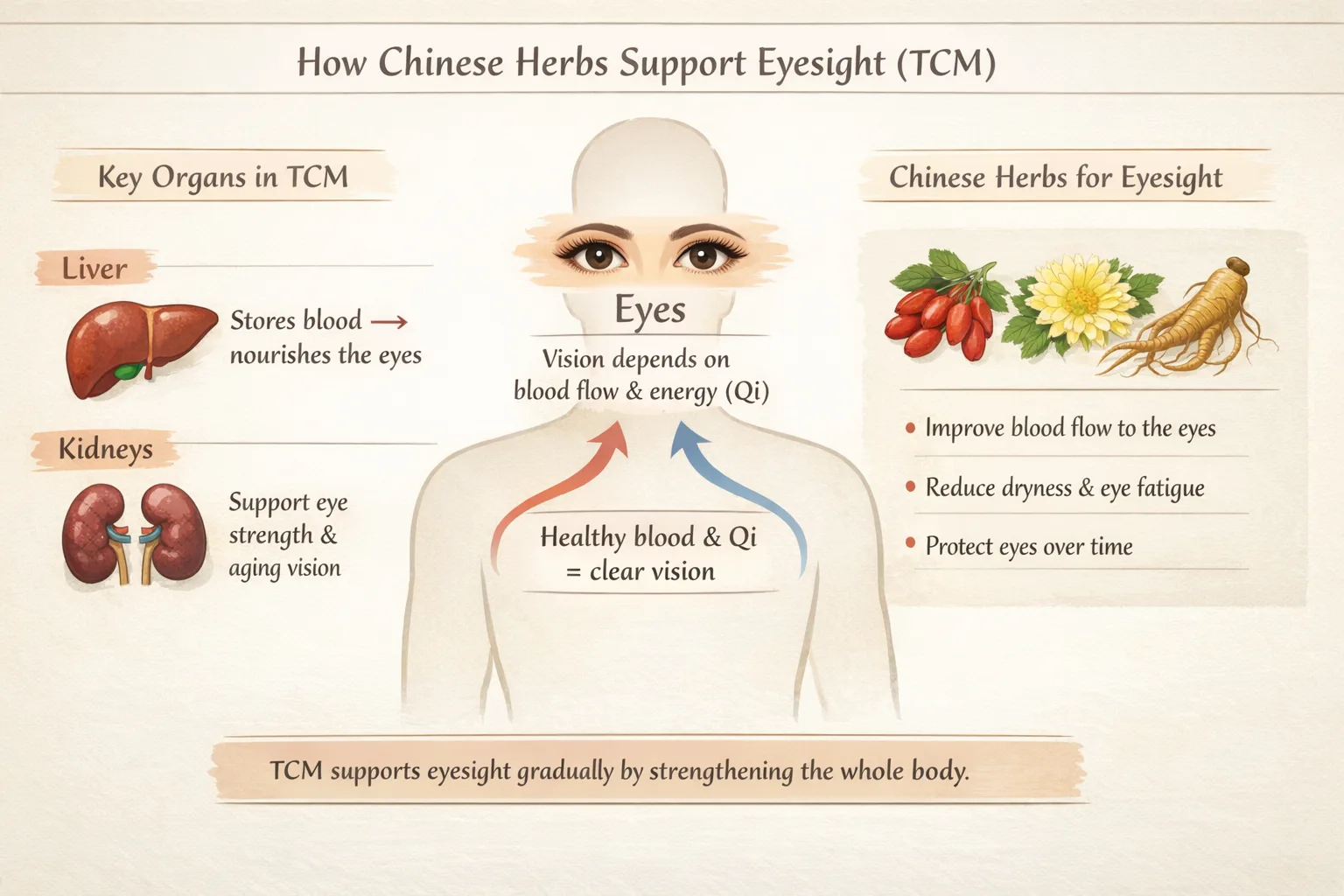
In traditional Chinese medicine (TCM), healthy eyes are linked to the liver, kidneys, and blood flow. TCM focuses on the whole body to keep the eyes strong and full of energy (Qi), rather than treating symptoms alone. Herbs play an important role in this approach. For centuries, Chinese doctors have used herbs to support blurry vision, dry eyes, night blindness, and eye fatigue by strengthening the body gradually, not as a quick fix. This holistic philosophy aligns well with wellness-focused services such as home health care seattle washington, where long-term health, prevention, and overall body balance are prioritized. Many of these herbs contain natural vitamins and antioxidants that help protect the eyes while supporting the body’s overall health.
Key Benefits of Chinese Herbs for Eyesight:
- Help blood flow to the eyes
- Lessen tired and dry eyes
- Protect eyes from damage
- Have a strong vision over time
- Support whole health
This approach centers on natural, preventive eye care.
5 Powereful Chinese Herbs for Eyesight Improvement
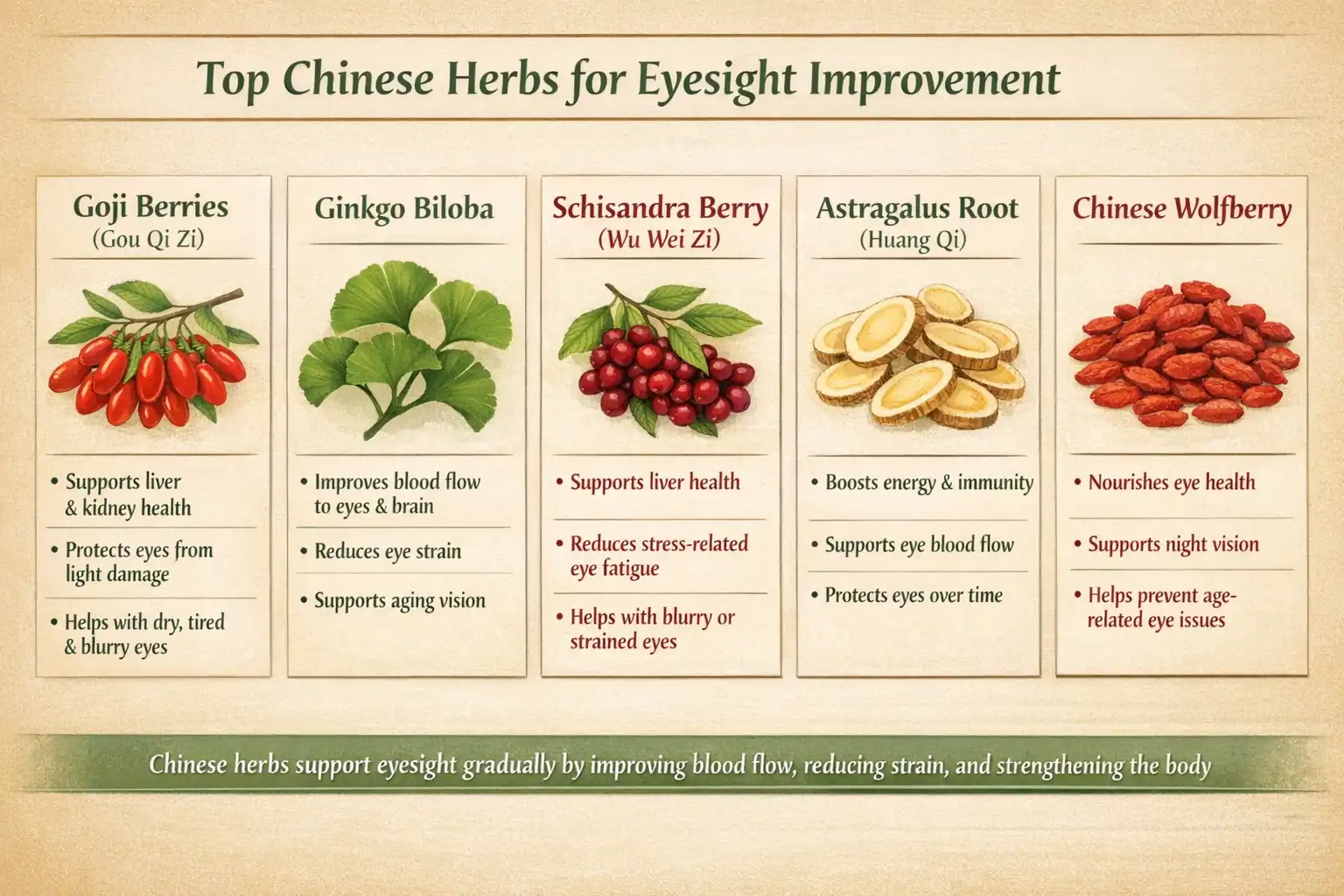
Goji Berries (Gou Qi Zi)
Chinese herbs for vision health, Goji berries (Gou Qi Zi) are good for eyes. They help the liver and kidneys and may help prevent vision from worsening with age. These are rich in antioxidants like zeaxanthin. According to the American Optometric Association, nutrients like zeaxanthin are vital for protecting the eyes from harmful light and age-related damage. Goji berries may help with dry eyes, tired eyes and blurry vision, particularly for people who read a lot or use screens most.
Ginkgo Biloba
Ginkgo biloba is a herb that helps blood flow better in the body with the eyes and brain. It’s frequently suggested for people with tired eyes, blurry vision or trouble concentrating in traditional Chinese medicine and new herbal use. Better blood flow delivers more oxygen and nutrients to the eyes or keeping them healthy. It can reduce eye strain from long hours of reading or screen use and may help with vision problems associated with aging.
Schisandra Berry (Wu Wei Zi)
Schisandra berry is used in Chinese medicine to support to liver which is essential for healthy eyes. When the liver is strong then the eyes get good blood flow and work well. Schisandra similarly helps the body cope with stress and fatigue. Stress and fatigue can cause eyes to feel dry, strained or blurry. Schisandra can help the eyes feel healthier and clearer by reducing stress and supporting the liver while also keeping the body stronger and more energetic.
Astragalus Root (Huang Qi)
Astragalus root known as Huang Qi is an herb that helps strengthen the immune system and improve overall health. It can also help to eyes by improving blood flow and reducing swelling which helping keep them safe from damage. It’s often used with other herbs in traditional Chinese medicine to enhance their effectiveness. Astragalus helps the body settle and keep energy moving which supports healthy eyes over time. Using it habitually can help protect vision and keep the eyes comfortable as we get older.
Chinese Wolfberry
Chinese wolfberry also called goji berry is full of nutrients that are good for the eyes. It has natural compounds and minerals which help keep the eyes healthy. Eating it habitually may help you see more clearly, lessen dry eyes and improve night vision. It is mostly used to stop eye problems and keep your eyes strong over time. Wolfberry is frequently included in herbal remedies to support the whole eye health.
How These Herbs Work in the Body?
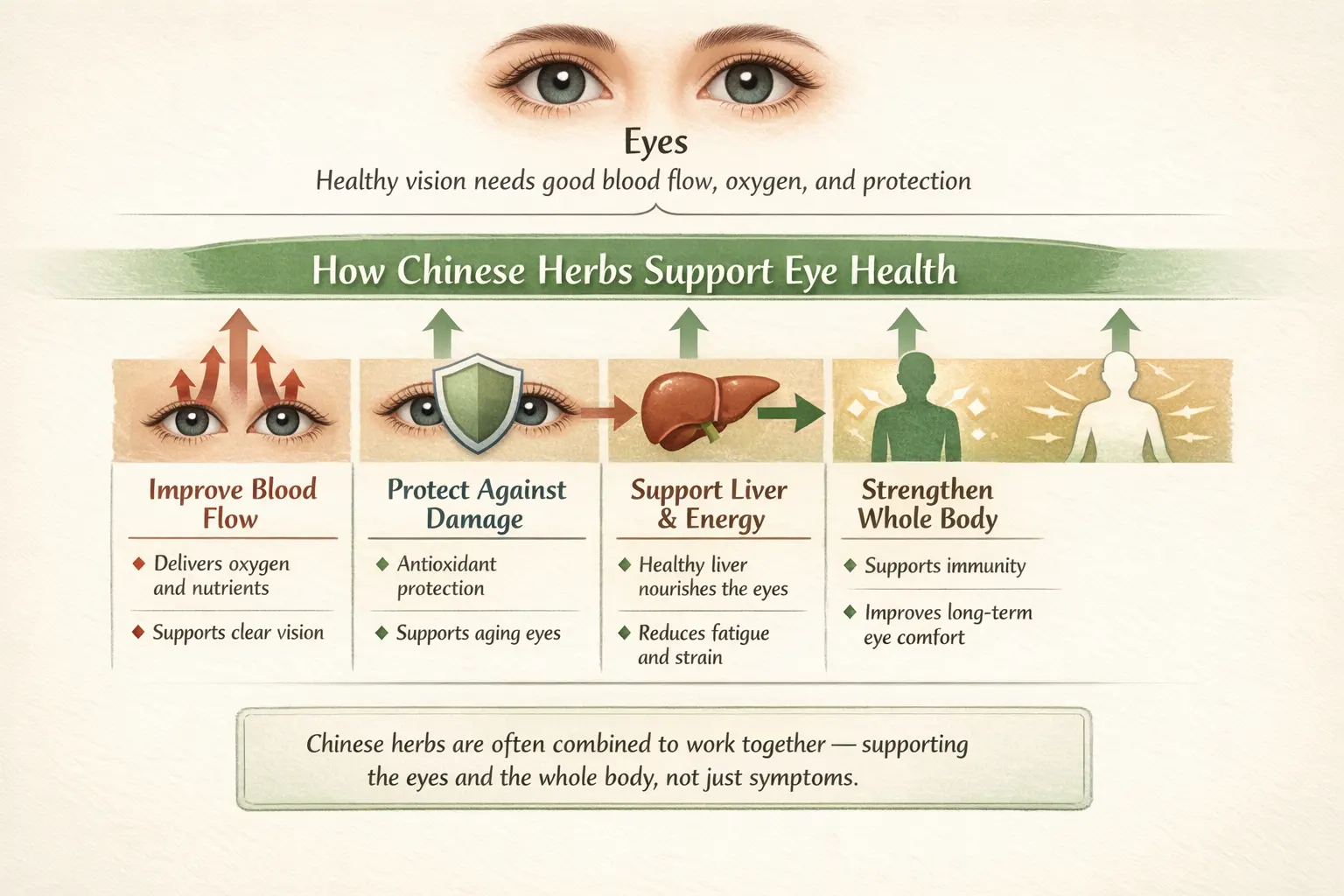
Chinese herbs address the main causes of eye problems, not just the symptoms. They improve circulation and protect the eyes from oxidative stress. For a deeper look into how these botanical ingredients impact health, the National Center for Complementary and Integrative Health (NCCIH) provides scientific overviews of how various herbs interact with the body.
Ways These Herbs Work:
- Benefit blood flow to the eyes to deliver more nutrients and oxygen.
- Protect the eyes from damage and aging.
- Work together to support the liver and offer more energy.
- Improve the immune system and overall health.
This natural method keep eyes healthy and comfortable for a long time.
Practical Applications and Modern Research on Eye Health Herbs
Using Chinese herbs for eyesight improvement is simpler than most people think and fits seamlessly into a busy daily routine. Many herbs come in diverse forms, so you can choose what works best for you. Goji berries can be eaten as a small snack or added to soups and made into tea. Ginkgo biloba and astragalus can be taken as capsules, tea or boiled in the water. Schisandra berries can be used to make tea or to add powder to food. These herbs make it easy to care for your eyes every day.
It’s essential to use the correct amounts from trusted sources as these natural herbs can even cause side effects or blend with medicine if not used correctly. These herbs help your eyes stay healthy or recover blood flow, reduce strain and protect your vision over time when used habitually.
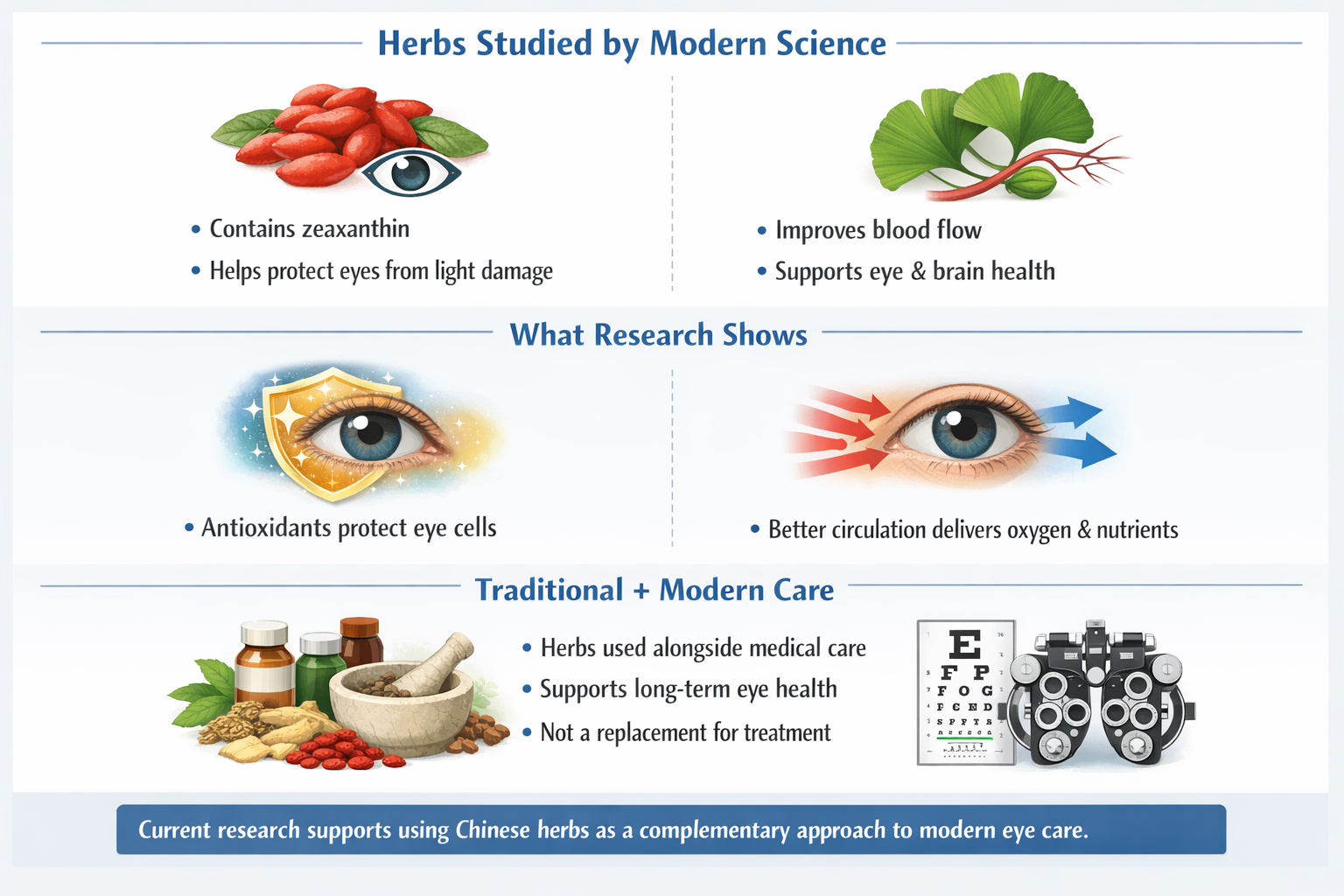
Recent studies show that Chinese herbs can keep eyes healthy. Goji berries contain a nutrient called zeaxanthin which protects to eyes and may help reduce the risk of vision complications. Ginkgo biloba helps in improve blood flow and brain health which can support good eyesight.
Doctors are now combining traditional herbs with modern eye care. This way, people can benefit from the combined effects of natural remedies and medical treatments. Large studies are still required but current research displays that these herbs can help support eye health.
Key Points:
- Goji berries have antioxidants which protect the eyes.
- Ginkgo biloba can help recover blood flow to the eyes.
- Using herbs with modern medicine can be supportive.
- Research displays that herbs can support and protect vision.
Conclusion
To conclude that Chinese herbs, eye health and natural remedies offer a safe and natural way to keep your eyes healthy. Some herbs like goji berries, ginkgo biloba, schisandra, astragalus and Chinese wolfberry help the body by providing with nutrients, improving blood flow and protecting eyes from harm. Regular use of these herbs can support long-term vision, reduce eye strain and slow the progression of age-related vision problems. Mixing to traditional herbal knowledge with modern science offers a complete balanced way to care for your eyes.
Check with a doctor before starting any herbal treatment each time particularly, if you have eye problems or take other medicines. For older adults, having informed conversations with healthcare providers is essential for overall well-being. Resources like questions to ask your gerontologist can help guide those discussions and support better health decisions. Adding natural habits alongside professional care can help maintain clear vision, steady energy, and overall quality of life.