
Today, more families need safe, comfy and personal care at home for their aging parents, people with disabilities or those with long-term illnesses. Many people want their loved ones to stay independent, while receiving the assistance they need in a familiar place. When considering care, two key options typically arise: home care agencies and caregiver registries. Equally help families find caregivers but they work in very different ways.
Knowing to these changes is important to select the correct choice. This content clarifies differences between home care agencies and registries, examines their services, prices and responsibilities, and helps you decide which is better: a home care agency or registry for your family.
What Is a Home Care Agency?
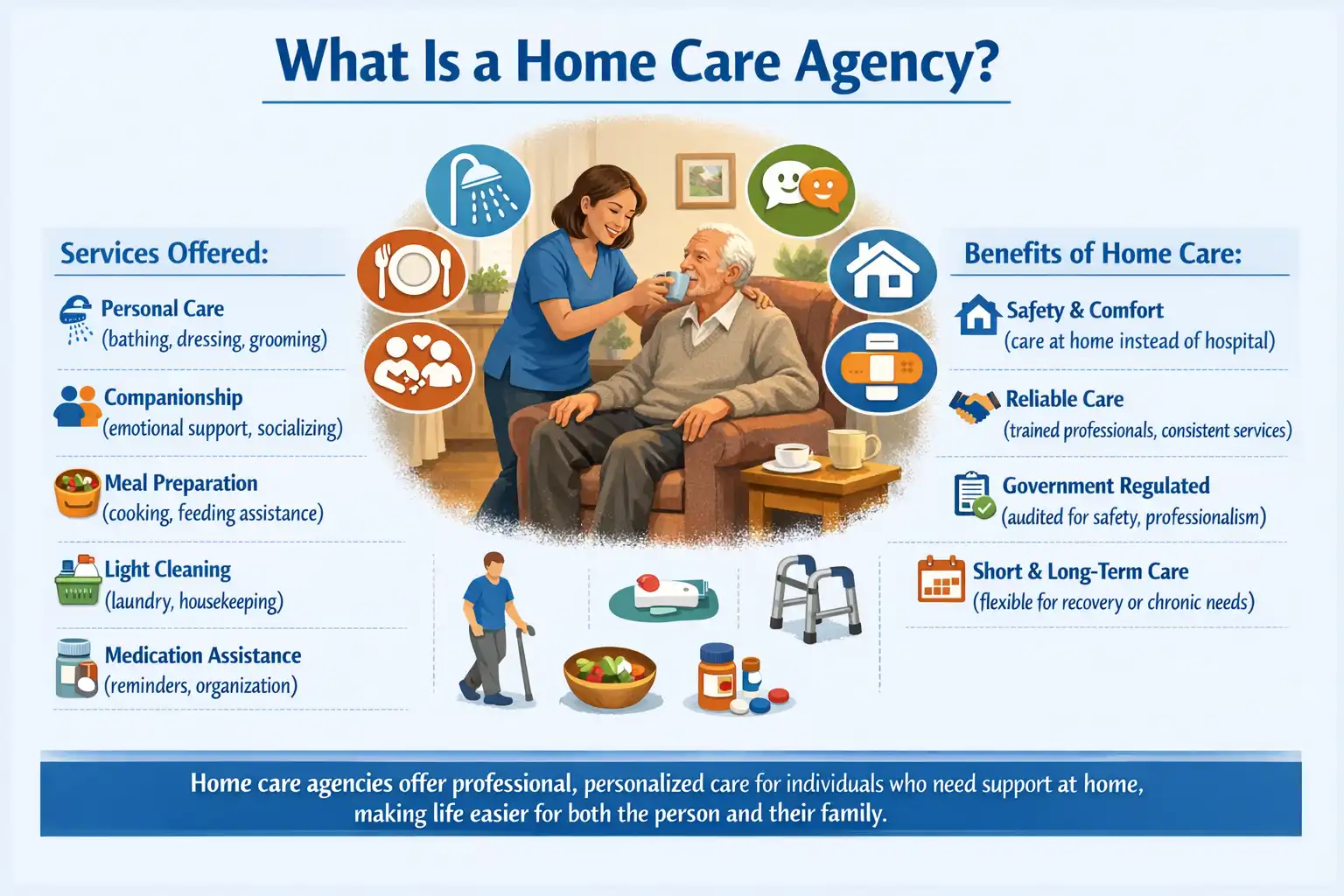
A home care agency is a company that employs and manages caregivers. They take care of almost all so families don’t have to discover or manage caregivers themselves. Most agencies follow instructions and are regularly audited by the government, making them safe and reliable. This means people can get professional, consistent care at home without having to manage the helpers themselves.
Home care agencies help people live securely and comfortably at home. They offer care for short-term recovery or long-term needs which making life easier for both the person and their family.
Services usually include:
- Assisting with bathing, dressing and grooming
- Offering companionship and emotional support
- Preparing meals and assisting with feeding
- Doing light cleaning and laundry
- Retelling about medicines
- Assisting with walking and moving around
- Nursing care like wound care or post-surgery assistance
These services help people get the care they want while, keeping them independent and safe at home.
Responsibilities of the Agency
One great advantage of an agency is that it takes care of all for caregivers. This includes:
- Finding and employing caregivers
- Checking backgrounds and giving training
- Setting work timetables and providing backups if required
- Paying wages, taxes and benefits
- Having insurance and workers’ compensation
- Watching over the quality of care
Families don’t have to act as owners, so they don’t have legal or paperwork concerns and can center on caring for their loved one. For more on how home care is regulated, you can check your State’s Department of Health (via Medicare.gov) to see how agencies are rated
Pros of Using a Home Care Agency
Using a home care agency has various benefits. They employ trained and vetted caregivers who provide safe and reliable assistance. For those requiring clinical expertise, agencies often provide Experienced Home Health care nurses in Seattle who are equipped to handle complex medical needs. If a caregiver is unavailable, then backup staff are ready. Care plans are made for each person and can change as needs change. Agencies monitor care to ensure it is of high quality. Families don’t have to worry about legal or work problems. Generally, agencies offer peace of mind with safe, steady and professional support at home.
What Is a Registry?
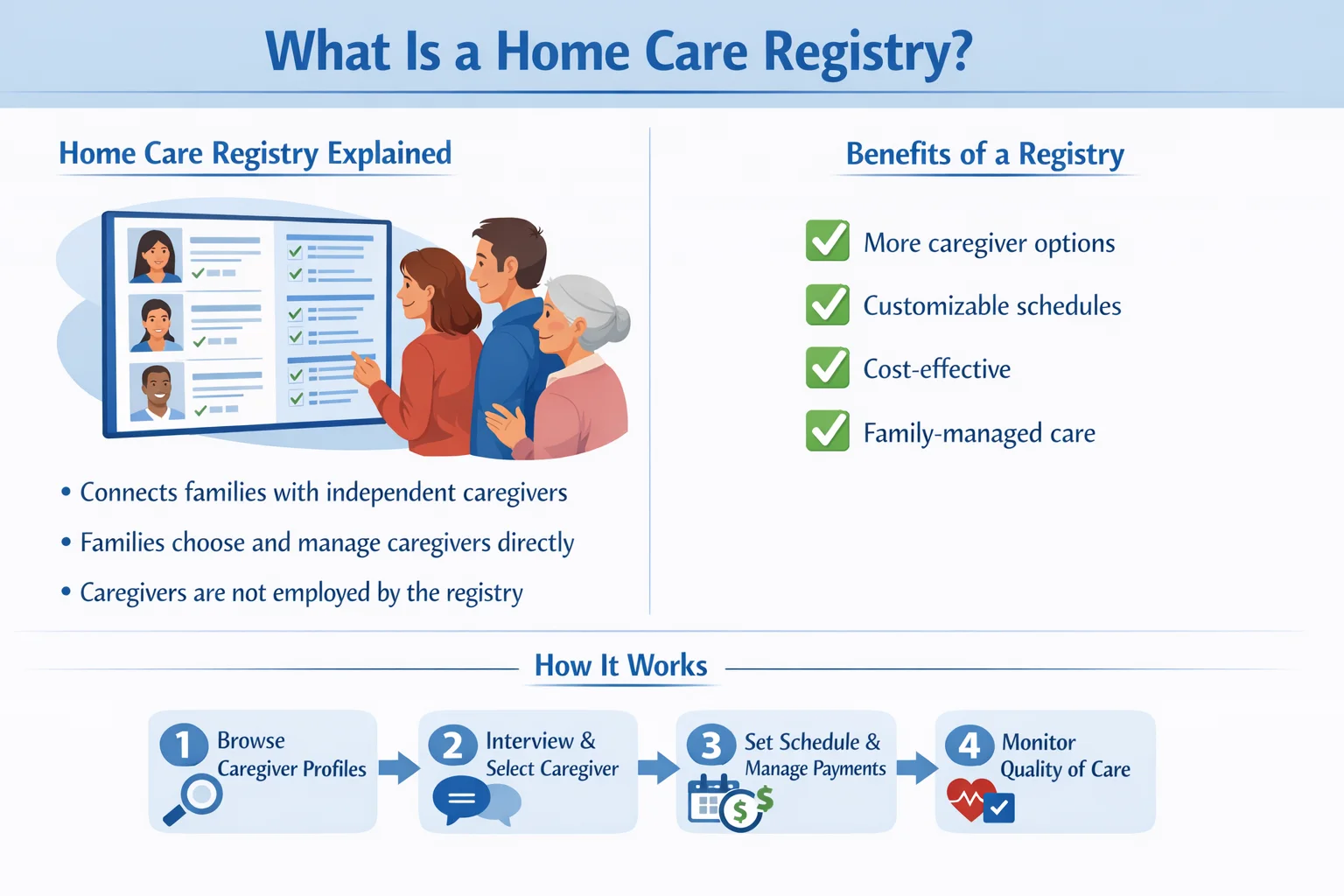
A home care registry is a service that helps families find independent caregivers. It is not a home care agency so it does not employ or manage caregivers. Instead, it works like a marketplace where families can browse caregiver profiles, assess their skills and choose the right person. The caregivers in registries typically work for themselves. This offers families more options while providing home support for seniors, people with disabilities, disabilities or those recovering from illness.
Registries help families find caregivers for everyday support. They may help with:
- Keeping company and speaking with customers
- Bathing, dressing and personal care
- Preparing meals and assisting with eating
- Light housework and running minor errands
- Retelling about medicines
- Taking customers to appointments
Caregivers are typically independent so the help they offer can be changed. Registries do not provide nurses or make care plans. Families choose caregivers based on their needs.
Responsibilities of the Registry
Home care registries maintain lists of independent caregivers and share their profiles, skills and availability with families.
Unlike agencies, registries do not manage caregivers. In this setup, the family often acts as the household employer. This means the family may be responsible for:
-
Interviewing and selecting caregivers
-
Handling payroll taxes (Social Security and Medicare)
-
Verifying legal work status
Pros of Using a Registry
A home care registry helps families find caregivers for their individual needs. Families can choose who helps or set the schedule and manage care the way they need. It can also cost less than using an agency.
Benefits include:
- You can select your caregiver
- You can make your own schedule
- It may cost less
- You deal openly with caregiver
Registries are useful for families who manage their own care.
Key Differences Between Home Care Agencies and Registries
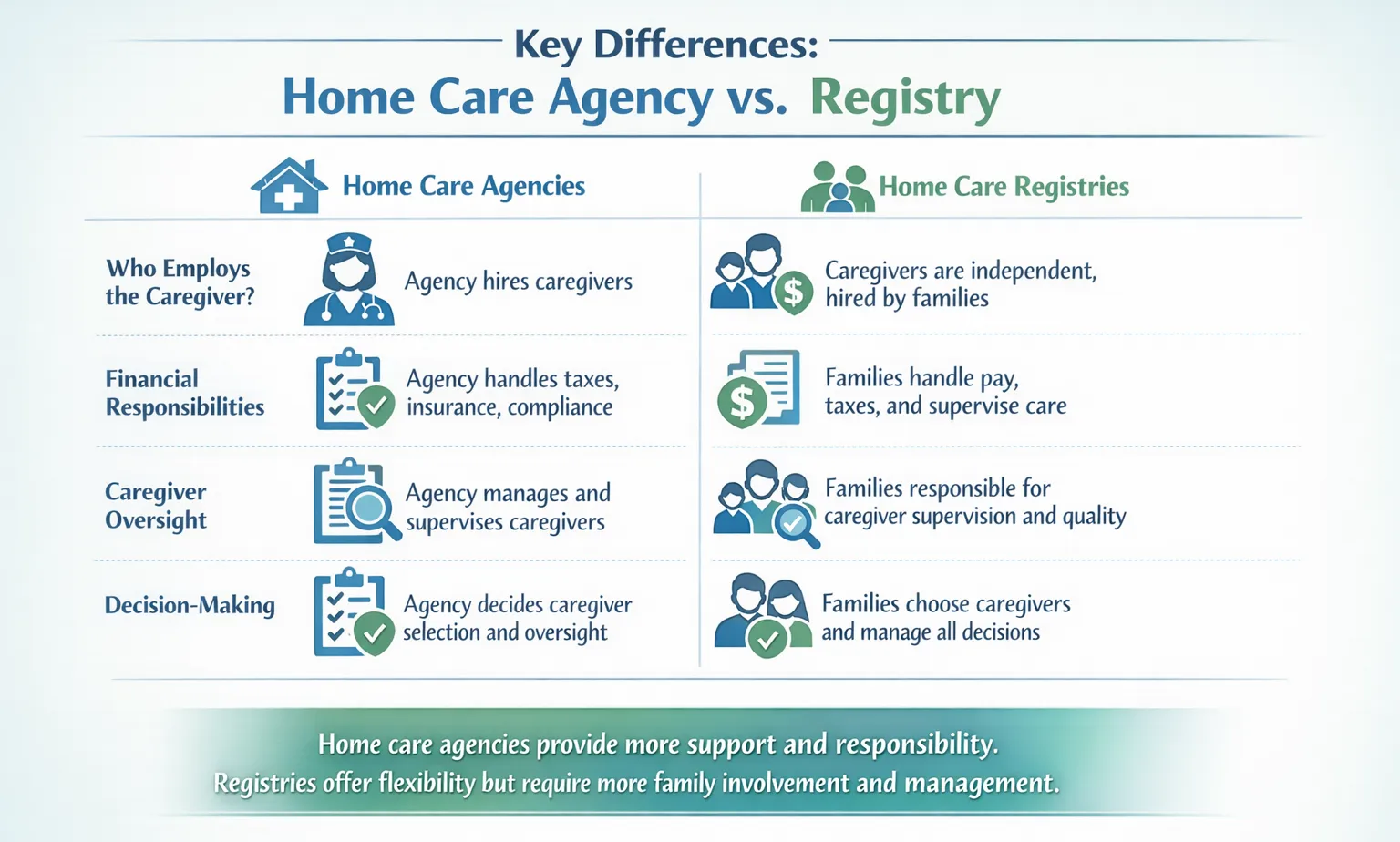
The key difference between a home care agency and a registry is who employs the caregiver. This changes who is responsible for lawful and financial duties. Families should recognize what this means for them.
- Home care agencies hire caregivers and handle taxes, insurance and compliance.
- Registries connect families with caregivers who work for themselves.
- Using some registry means families may want to handle pay, taxes and supervising care.
- Knowing to this helps families select the right choice for their situation.
Caregiver Oversight and Supervision
Home care agencies monitor caregivers to ensure care is safe and effective. They have managers, consistent check-ins and reviews and they address issues when they arise. Registries do not watch caregivers. Families must check the caregiver themselves which make certain care is good and resolve any complications. This can be tough for families who are busy or have little involvement in caregiving.
Cost Structure
Cost is an essential factor when selecting home care agencies vs. registries:
- Home care agencies typically charge more per hour because they pay for insurance, training, background checks, and management.
- Registries may look inexpensive but families handle taxes, benefits, additional hours and finding backup caregivers.
- These additional tasks can add unseen costs and take time.
Choosing the cheapest choice at first can end up costing more and causing anxiety later.
Types of Care Provided
Home care agencies offer a range of services including medical and personal care. They are best for people with serious health needs, such as those living with Alzheimer’s or Dementia. Because these conditions require specialized knowledge, many families also look for external resources; for example, reviewing the best dementia books for caregivers can provide deeper insight into managing daily challengesThis can include assistance with medicines, special support and everyday activities. Registries typically offer lighter and non-medical care such as companionship, meals and help with bathing or dressing. Families should choose based on the level of care and medical help required.
| Feature | Home Care Agency | Home Care Registry |
|---|---|---|
| Employment Status | The Agency is the employer; they handle taxes, insurance, and compliance. | The Family is the employer; caregivers are independent contractors. |
| Oversight & Supervision | Managed by the agency with consistent check-ins and performance reviews. | The Family must monitor care, resolve issues, and ensure safety. |
| Cost Structure | Higher hourly rates but covers training, background checks, and management. | Lower initial cost but families handle taxes, benefits, and backup care costs. |
| Types of Care | Ranges from companionship to complex medical and personal care. | Typically limited to non-medical care (companionship, meals, dressing). |
| Reliability | Agency provides a backup if the primary caregiver is unavailable. | The Family is responsible for finding a replacement if the caregiver cancels. |
Which One Is Right for You?
Choosing the correct care depends on a few key things. Families should consider the level of care required, the budget and the level of help or control they need to manage care. These points can disturb the quality and ease of care.
Care Needs: If your loved one needs skilled nursing, continuous assistance or complex medical support then a home care agency is typically safer.
Budget: Registries can be inexpensive for basic help but families must take on additional tasks such as paying and scheduling caregivers.
Supervision and Flexibility: A registry is good if you need more control and flexible hours while an agency offers reliability, structure and less stress.
These points are essential when deciding between a home care agency and a registry.
Decision-Making Tips
When choosing care then first think about what help is required now and in the future. Decide how much time you can spend assisting or checking on the caregiver. Question about insurance, background checks and training to make sure the caregiver is harmless and an expert. Look at the full cost, not only the hourly price and check references or reviews. Many families start with a registry for more options and lower cost then move to a home care agency if care needs grow or become more complex.
Understanding what is specialized healthcare and its importance can help you determine if your loved one has reached a stage where a higher level of professional agency support is necessary.
Final Words
To conclude, selecting between home care agencies and registries or deciding how to choose between a home care agency and a registry is not hard if you consider carefully. Equally have good points. Home care agencies offer trained caregivers, guidance and peace of mind. Registries provide greater flexibility, let you select a caregiver directly and can cost less. The correct choice depends on your loved one’s needs, your budget and the level of involvement you need. Families should assess the care required, ask essential questions and consider the future. By knowing the changes and weighing the benefits then you can choose the option that offers safe or reliable and caring support for your family.