
Low Maintenance Pets for Seniors are not only quiet or easy-to-feed animals. They are friends who fit into a senior’s everyday life, energy and ability to move around. No pet is fully care-free so it helps to know what “low maintenance” actually means. The goal is ease, emotional support and simple routines, not more work or continuous attention. This lifestyle-fit guide displays to seniors how to choose pets that match their day, whether mornings are calm, activity is light, or evenings are relaxed.
By focusing on routines and energy levels, seniors can select a pet that brings happiness without stress. Research shows that animal-assisted interventions can significantly improve the mental well-being of older adults, making companionship easy and natural every day.
Key Takeaways
- ✓ Lifestyle fit matters more than pet size, type, or popularity
- ✓ Pets with calm routines and low physical demands suit seniors better
- ✓ Independent and predictable pets reduce stress and daily effort
- ✓ Simple feeding, cleaning, and care routines make companionship easier
- ✓ Choosing comfort and energy match leads to happier, long-term bonding
Why Lifestyle Fit Matters More Than Pet Type
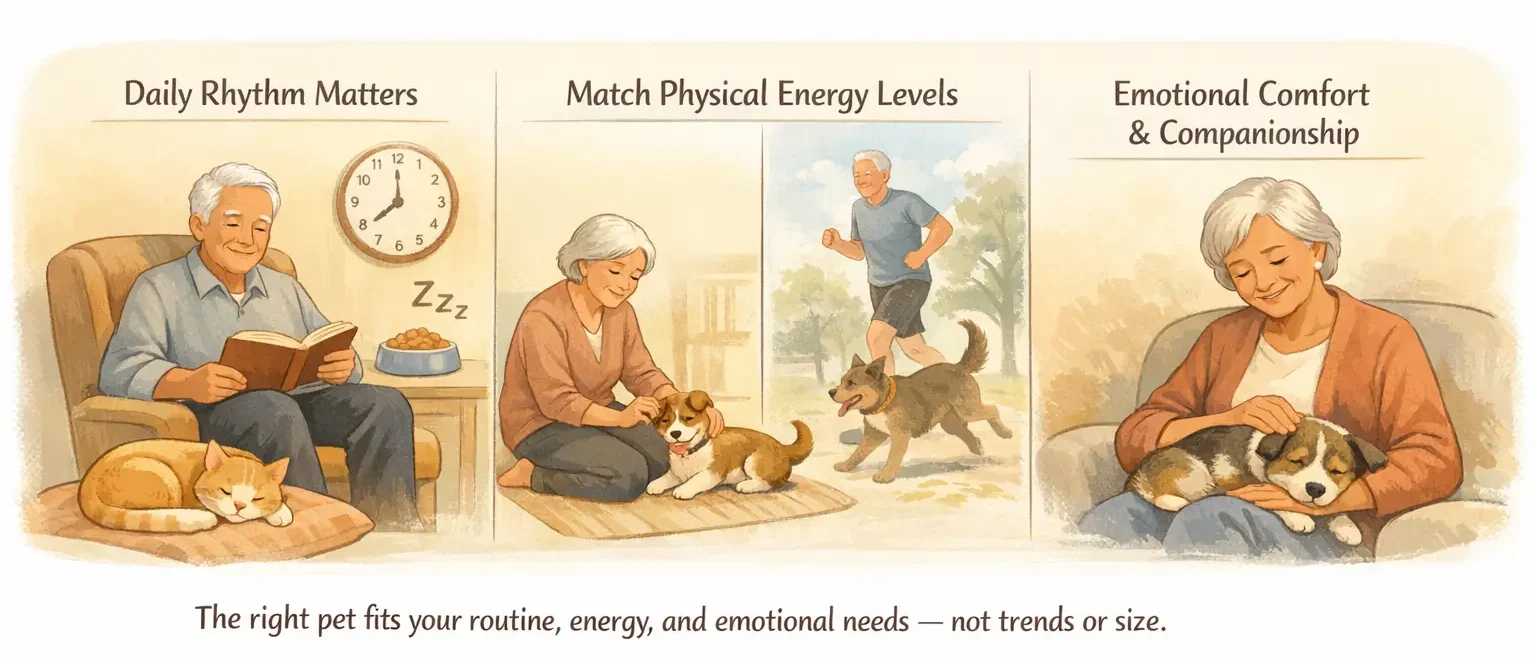
Choosing a pet just because of its size or popularity can miss the most important thing: lifestyle fit. For seniors, the best pet isn’t always most common or “easy” one. It’s the pet that matches everyday routines or energy levels and emotional needs. Knowing how a pet fits into daily life can stop stress and make companionship more amusing. Instead of concentrating on species or what’s trendy, it’s well to think about physical wants, everyday habits, and social interaction.
Key Things to Consider:
Daily Rhythm: Pets have their own sleep, feeding, and activity patterns. A mismatch can cause anxiety.
Physical Demands: Some pets want long walks or lots of play which may also be too much for pets with limited mobility.
Emotional Interaction: Some pets need continuous attention; others are pleased being calm and quiet.
Selecting a pet that fits your lifestyle takes comfort, happiness and a strong bond.
Pets That Are Easier to Care For
Some pets are calm, silent and can take care of themselves most of the time. These pets fit well into a senior’s everyday life. Each animal has its own personality but calm, predictable pets are typically easier to handle. Choosing the right pet is more essential than the breed or type.
Examples of easier pets:
Calm Cats: Quiet adult cats require little attention. According to the ASPCA, older cats are often the best fit for seniors because their personalities are already developed.
Small Caged Pets: Hamsters, gerbils and guinea pigs are simple to care for. They want feeding and cage cleaning, but not much play.
Fish: Fish in an aquarium are calming to watch. They sometimes want tank cleaning but not every day.
Older Animals: Older dogs or cats are slower and calmer. They fit well with a kind, quiet routine.
Selecting the pets that are independent, silent and predictable makes life easier for seniors.
Interaction Without Overexertion
Having a pet doesn’t mean you have to play or move a lot every time. Lots of seniors like pets that offer love and company without needing too much energy. Pets with simple routines and calm behavior make life easier and more calming. Short moments like petting, sitting together or just being near each other can bring comfort and decrease loneliness. Choosing a pet that matches your energy helps you enjoy time together without feeling exhausted, stressed or guilty.
Key Points:
Predictable Engagement: Pets that stick to routines or preferred resting spots feel calming.
Emotional Presence: Small, kind moments offer emotional support.
Adapted Interaction Style: Pets that match your energy level create stress-free interactions.
Quality Over Quantity: Enjoy meaningful moments, not long, exhausting activities.
Even short, consistent time with a pet can make seniors feel pleased, connected and cared for.
Cleaning, Feeding and Easy Routines
Taking care of a pet means feeding, cleaning and grooming. For seniors, it’s best to plan these tasks as stress-free as possible.
Daily or Weekly Care
Pets that want attention each day can feel exhausting, even if each task is small. Pets that need less care like feeding or cleaning once a week are easier to switch.
Small Tasks Are Easier
Small Tasks Are Easier Doing short, simple tasks—like filling water or cleaning a minor cage—is stress-free than long or tiring chores. If you or a loved one are transitioning into a professional care setting, such as a specialized adult family home, you can often find support for these small daily tasks to ensure companionship remains joyful.
Fit Care into Your Day
Choose pets whose care matches your everyday routine like morning coffee, evening reading or short walks. This has pet care calm and stress-free.
Key Points:
- How frequently a pet wants care disturbs how hard it feels.
- Small, simple tasks are stress-free on your body and mind.
- Match pet care to your usual routine.
Predictable schedules make companionship calm and pleasant.
Common Misunderstandings About “Easy” Pets
Many seniors consider some pets to be “easy” to care for but that is not always true. Wrong ideas can make pet care tougher and stressful. Knowing the facts helps make better selections.
“Small pets are always easier” – Small animals may want distinct food, frequent cleaning or lots of attention. Being small doesn’t mean they are simple.
“Cats take no effort” – Cats are independent but they still want feeding, litter cleaning and some play or attention.
“Fish don’t need care” – Fish tanks want water changes, cleaning and checking the fish for health complications.
Understanding what each pet actually needs helps seniors choose pets that fit their lives and stay happy.
Choosing a Pet That Matches Your Comfort Level
Choosing the correct pet starts with thinking fairly about yourself, not only following what’s common or what others say. Seniors should look at their everyday routines, energy and what feels easy to manage. Selecting a pet that fits your life makes companionship more enjoyable than stressful. Energy matters a lot. Consider how active you feel most days and on low-energy days. Pets that want a lot of exercise or attention can feel exhausting. In contrast, calm pets with predictable habits are stress-free to care for and offer comfort.
Travel and schedules are key, also. If you move around or have changing plans, select a pet that can handle short absences, or arrange for someone to help. Some animals are independent, while others want more care. Matching a pet to your lifestyle makes life less worrying.
Consider how much interaction you need. Some people like quiet pets, some enjoy playing sometimes, and others like more company. Knowing what you need helps stop frustration for you and the pet.
This way, you focus on comfort, dignity, and a good match for your life, not just convenience or trends.
Key Points:
- Choose a pet that matches your energy.
- Consider travel and time away.
- Select based on how much interaction you need.
- Center on comfort and a good fit.
Don’t follow trends or other people’s opinions.
Practical Takeaway
In short that selecting a low-maintenance pet means finding one that fits your lifestyle, energy and everyday routine. Size, popularity or cuteness are less important than whether you can easily take care of the pet. Understanding what feeding, cleaning and caring actually involve helps seniors make selections that are easy and stress-free.
Paying attention to a pet’s personality, independence and habits confirms that pet care adds joy rather than pressure. Thinking about your own routines, energy and abilities makes companionship harmless and rewarding. When the pet matches your needs then it brings comfort, calm and happiness without additional work or worry. A well-chosen pet can make everyday life more peaceful or enjoyable and emotionally satisfying for seniors.