
The term “senior citizen” is widely used, but it can mean different things. For some people, it means retirement and getting special profits. For others, it means having a sense of life involvement and wisdom, and beginning a new stage in life. A lot of people think there is a set age to become a senior, but that can change. Age can vary depending on laws, healthcare, social services, and personal views.
This guide looks at what age is considered a senior citizen. And when do you qualify for senior status? It clarifies these questions from different sides—legal, social, healthcare, cultural and personal so you can understand how being a senior is experienced, understood and perceived in various ways.
What age is legally recognized as “senior citizen”?
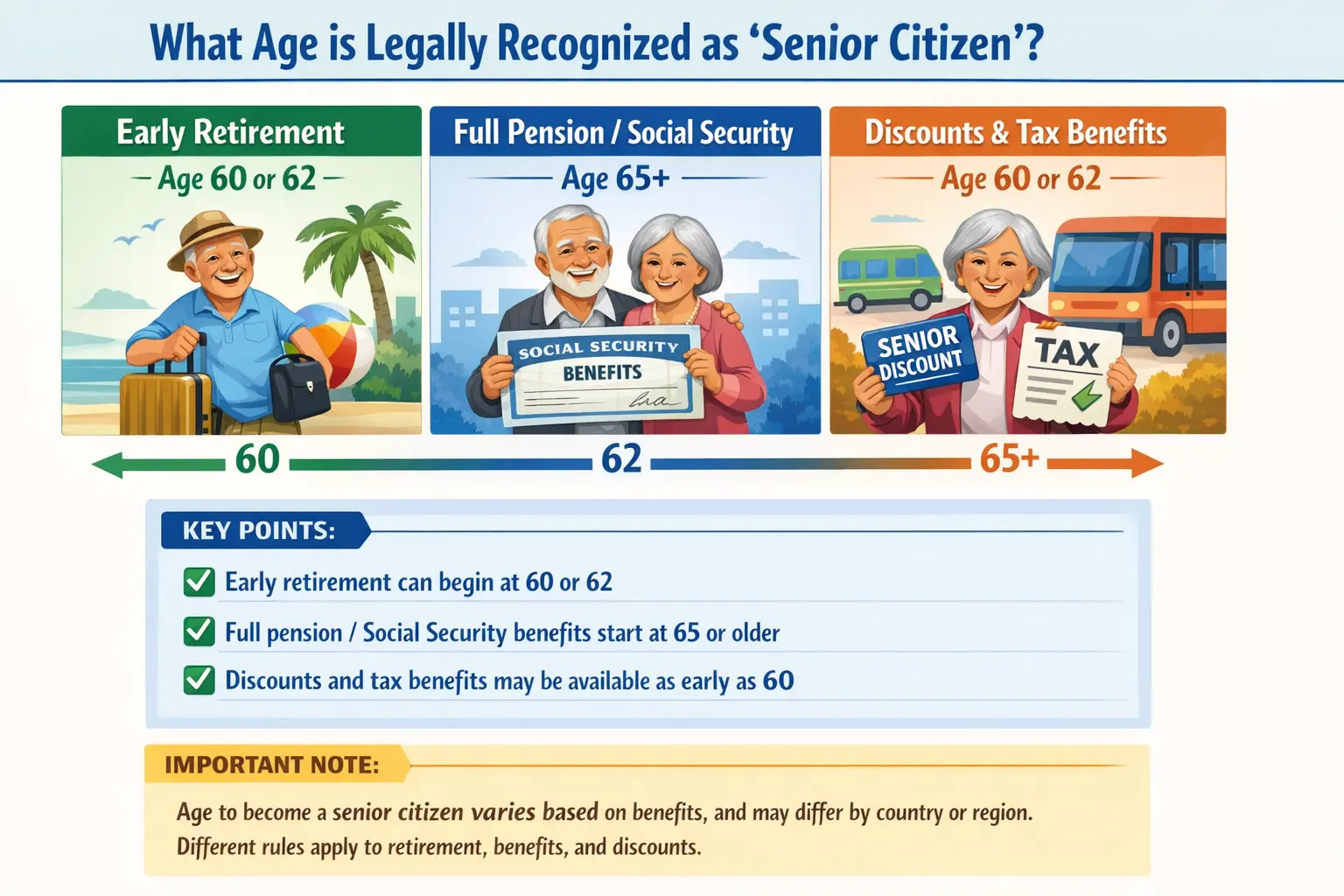
A senior citizen is typically someone who can receive retirement benefits, pensions or government assistance. In various countries, this age is 65. This is the age when people frequently retire and get age-based profits. But it can be changed in some places. Some regions refer to people as seniors at 60 for things like bus discounts, government assistance, or early retirement. Full profits may come later at 67 or 70. For example, according to the Social Security Administration, your ‘Full Retirement Age’ depends on the year you were born
Examples:
- Early retirement may start at 60 or 62.
- Full pension or social security may begin later.
- Some discounts or tax benefits may have started healthcare benefits previously.
Legally, there isn’t only one age to be a senior citizen. It depends on the benefit or right you are watching. That’s why people frequently ask At what age do you become a senior citizen? And get different replies in different situations.
At what age can you access senior citizen benefits?
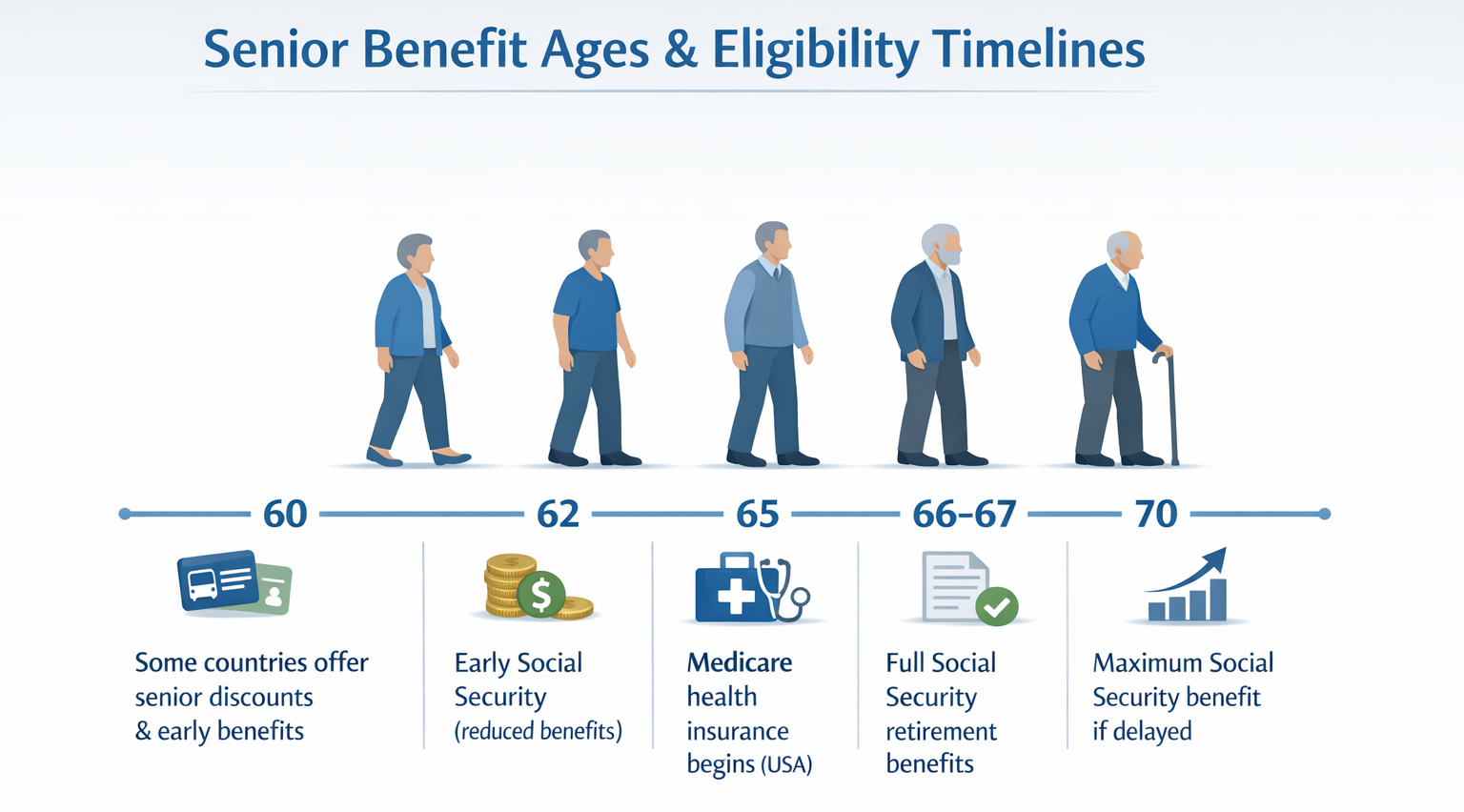
Social services help determine who is a senior citizen. Governments frequently choose a certain age to get profits. This helps people recognize when they become a senior. In the United States, some programs set age restrictions. Social Security retirement benefits can start at 62 but the amount is smaller if taken too early. Full Social Security benefits typically begin at 66 or 67. Medicare health insurance starts at 65 to help with medical costs.
In other countries, the age for senior benefits can be changed. These ages often make people feel like seniors. Benefits are key to planning retirement, healthcare, and finances. However, senior status is about more than just government checks; it’s about accessing the right care. For those navigating these milestones in Washington, specialized home healthcare Seattle services can provide the support needed to maintain independence as you qualify for senior status. Senior status in social services depends more on benefit rules than on age.
- Social Security benefits can start at 62 (smaller if timely).
- Full Social Security benefits typically begin at 66–67.
- Medicare health insurance starts at 65.
- Other countries may start benefits at 60, 63, or 65.
Paybacks help with money, health and retirement. People frequently check their age to know when to apply. Rules for benefits: choose who is a senior. Age alone does not always make somebody a senior.
How does healthcare define senior citizens?
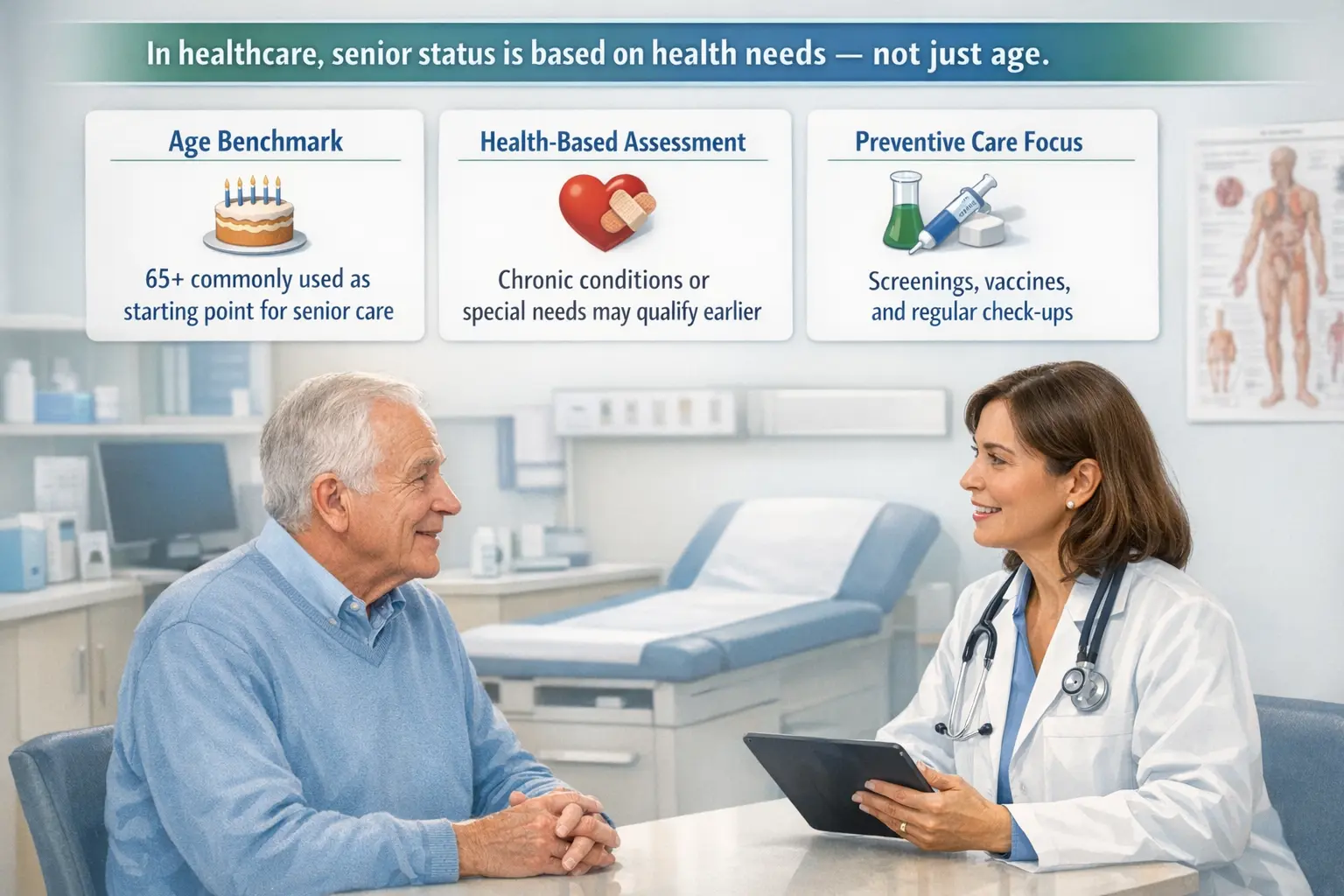
In healthcare, being a senior is more about health needs than age. Doctors and insurance companies assess a person’s health and the need for check-ups to identify who may need special senior care. Health insurance or Medicare for seniors typically begins at age 65, which is why hospitals and clinics often use this as the starting point for senior services
But, some people may get senior care sooner if they have certain health complications. Age is not only thing that matters—how healthy somebody is, their lifestyle and their abilities are also important. This means in healthcare, being a senior is about health, not only a birthday.
Important healthcare services for seniors include:
- Check-ups and screenings like bone tests or cancer tests
- Vaccines for older adults
- Doctor visits concentrated on senior health
- Health insurance or Medicare for seniors
- Help at hospitals, care homes or at home
In short, healthcare defines seniors by who wants additional care and attention, not only by how old they are. You can view the full list of recommended health checks for seniors from the National Institute on Aging.
Does age alone make someone a senior?
Different cultures view aging differently. In many Western countries, people are called seniors when they retire or turn 65. But in other cultures, being a senior is not about age. It can mean having wisdom, helping family or being respected in the community. In some places, older people are leaders or advisors because of their life experience. How a person feels is also important? Some may feel like seniors in their 50s due to health changes or life events while others in their 70s or 80s may not feel like seniors if they are active and independent.
As people live longer and stay healthier, getting older is seen as a time to grow, learn, and help others—not just a time to slow down. Maintaining this independence often requires a proactive approach to wellness. Understanding what is specialized healthcare and its importance can help individuals stay active and vibrant long after they reach the typical “senior” age. Ultimately, age alone does not make someone a senior; it also depends on culture, lifestyle, and personal feelings.
Key Cultural Views:
Respect for Elders: Older people are honored and valued for guidance.
Family Milestones: Becoming a grandparent or helping family can display senior status.
Helping the Community: Sharing knowledge and assisting others displays senior wisdom.
Personal Feeling: How a person feels about aging matters as much as their age.
Being a senior is about culture, involvement in life, and personal feelings, not just a number.
When do people feel like they’ve reached senior status?
People frequently feel like seniors because of life changes not only their age. Retirement is a great moment that makes many feel like a senior. Leaving work can change everyday routines, social life and money planning.
Other signs people notice are:
- Feeling less energy or variations in their body
- Being able to use senior discounts or distinct memberships
- Changes in family, like becoming a grandparent or assisting with care for others
How people get themselves into matters. Society can disturb this feeling. If others call someone a “senior” at a certain age, they might start to feel it too, even if they are still active and healthy.
This is why, when you qualify for senior status, there are two answers. Officially, programs or institutions may set an age, but personally, feeling like a senior comes from life events, involvements, and changes in everyday life. Everybody feels it differently, centered on their own journey.

Final Words
In short, what age is considered a senior citizen? Many people think 65 is the age when someone becomes a senior, but this can vary across countries, programs or rules. Some services allow people to get senior benefits earlier, while others may start later. Culture, society and personal life also affect how someone is seen as a senior. Being a senior is not only about age but it also depends on health, everyday habits, attitude and life experiences.
Being a senior can be a time to learn new things, try new things and enjoy life in changed ways. Seniors who stay active and positive frequently feel happier and more confident. Seeing senior years as a time of growth and opportunity helps everybody respect and value older adults. It retells us that this stage of life can be meaningful, full of learning and a chance to keep relishing life to the fullest.