
Healthcare has changed a lot over time. Previously, general practitioners treated common illnesses and provided general care. However, as medicine improved and diseases became more complex, doctors with special skills were required. This led to rise of specialized healthcare.
Now, we clarify what is specialized healthcare. Why it’s key, how it differs from general healthcare and how patients can access it. Specialized healthcare centers focus on a single area of medicine which allowing doctors to provide better care for specific complications. Knowing the what specialized healthcare is? Helps patients make smart choices, get right treatment and take better care of their long-term health.
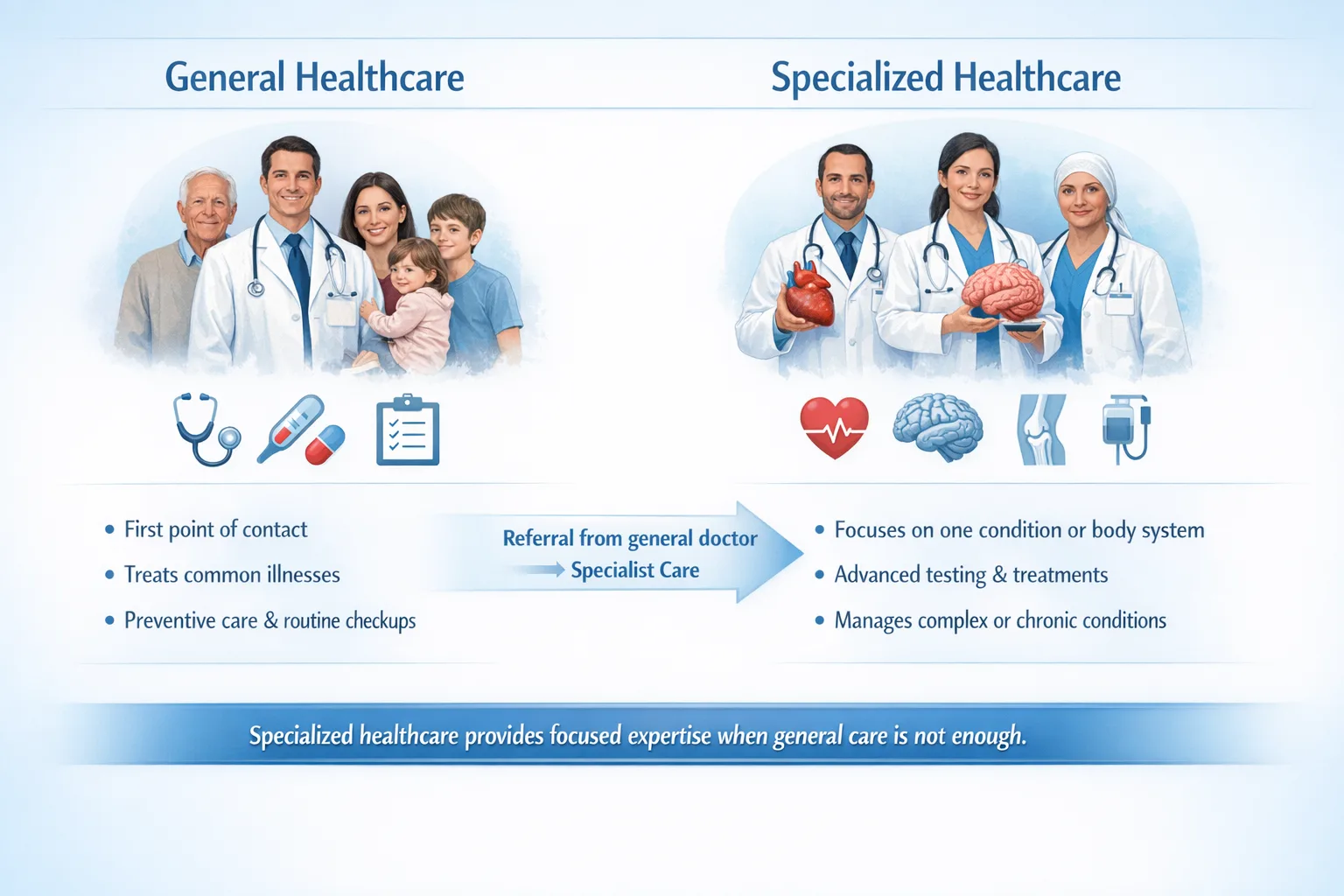
Not like regular doctors who look after general health, the specialists center on one part of the body, age group or type of disease. For example, a heart doctor treats heart complications and a brain doctor (neurologist) treats brain and nerve problems. Regular doctors are typically the first people patients see for checkups, minor illnesses or preventive care. The specialists step in when a condition requires more tests, thorough checks or special treatment.
Key points about specialized healthcare:
- Centers on one area of medicine or disease.
- Offers advanced tests and treatment.
- Helps with severe or long-term health problems.
- Works with regular doctors for whole care.
Why Specialized Healthcare Is Important
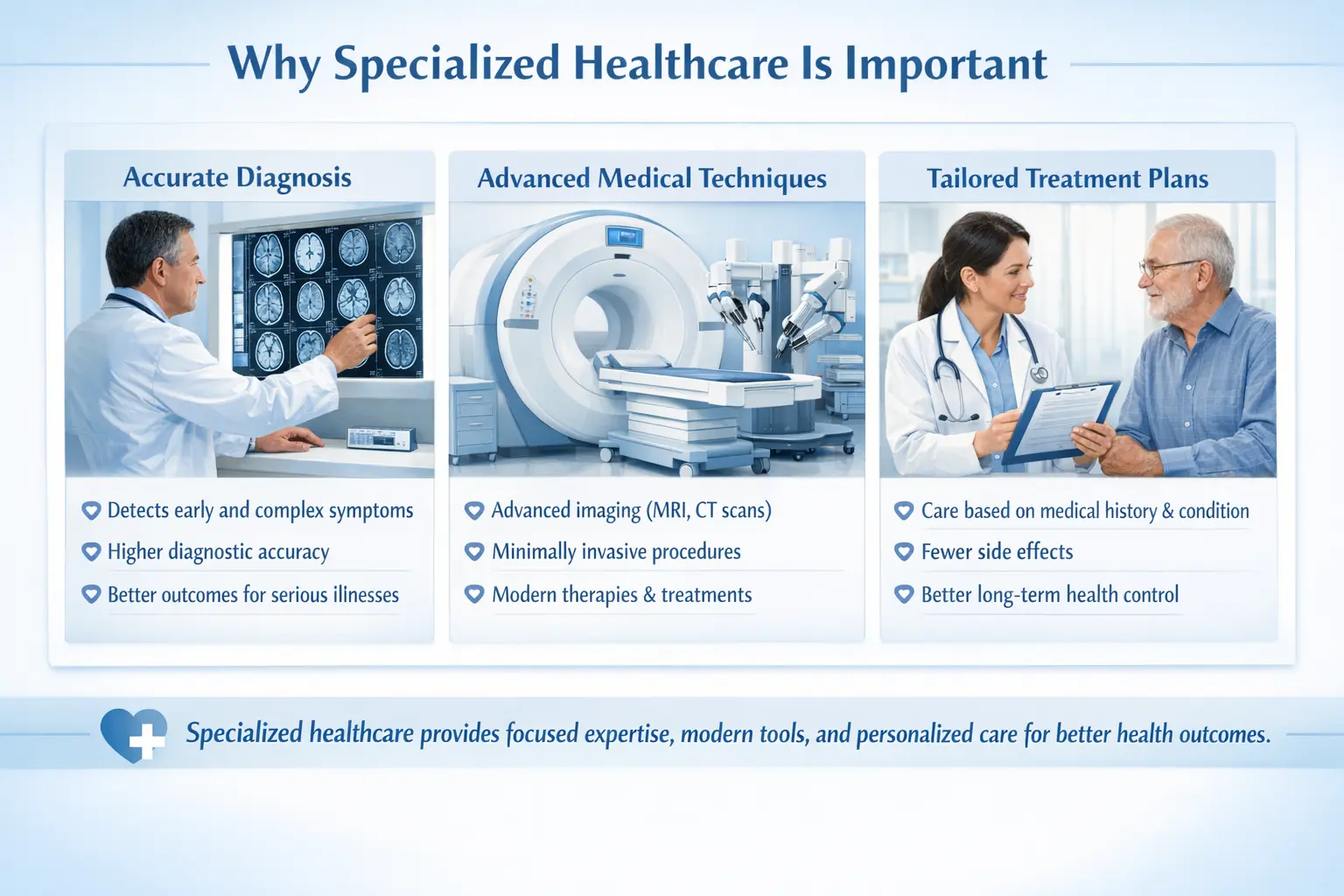
A specialized healthcare is essential as it helps patients get better treatment. Specialists know a lot about a specific area of health and can notice minor signs that general doctors might miss. This means they can offer a correct diagnosis and best treatment plan particularly for serious or long-term illnesses. The research displays that people with diseases like cancer or heart problems frequently live longer and feel better when treated by specialists. In short, having professionals care for you can save lives.
Access to Advanced Medical Techniques
The specialist doctors use up-to-date tools and treatments that regular doctors may not have access to. These include small-surgery approaches, robot-assisted procedures, or advanced scans and new therapies. These help doctors correctly identify the problems and treat them effectively.
Key Points:
- The small surgeries help patients settle faster and stay safer.
- Innovative scans such as MRI and CT which help doctors diagnose problems more clearly.
- New treatments like immunotherapy are more effective at treating diseases.
This supports patients getting the best and modern care for better health.
Tailored Treatment Plans
The specialized healthcare helps doctors create treatment plans that are tailored to you. The specialists consider your medical history, lifestyle, genes and the severity of your condition instead of using the same plan for everybody. This makes treatments more effective and reduces unwanted side effects.
For people with long-term complications like diabetes, heart disease, or autoimmune disorders, a personal plan can make everyday life easier and improve overall well-being. Often, the best way to manage these complex, tailored plans is through professional seattle home health care, which ensures patients receive consistent, expert support in the comfort of their own homes. This personalized approach helps control symptoms better and improves long-term health outcomes.
Examples of Specialized Healthcare Fields
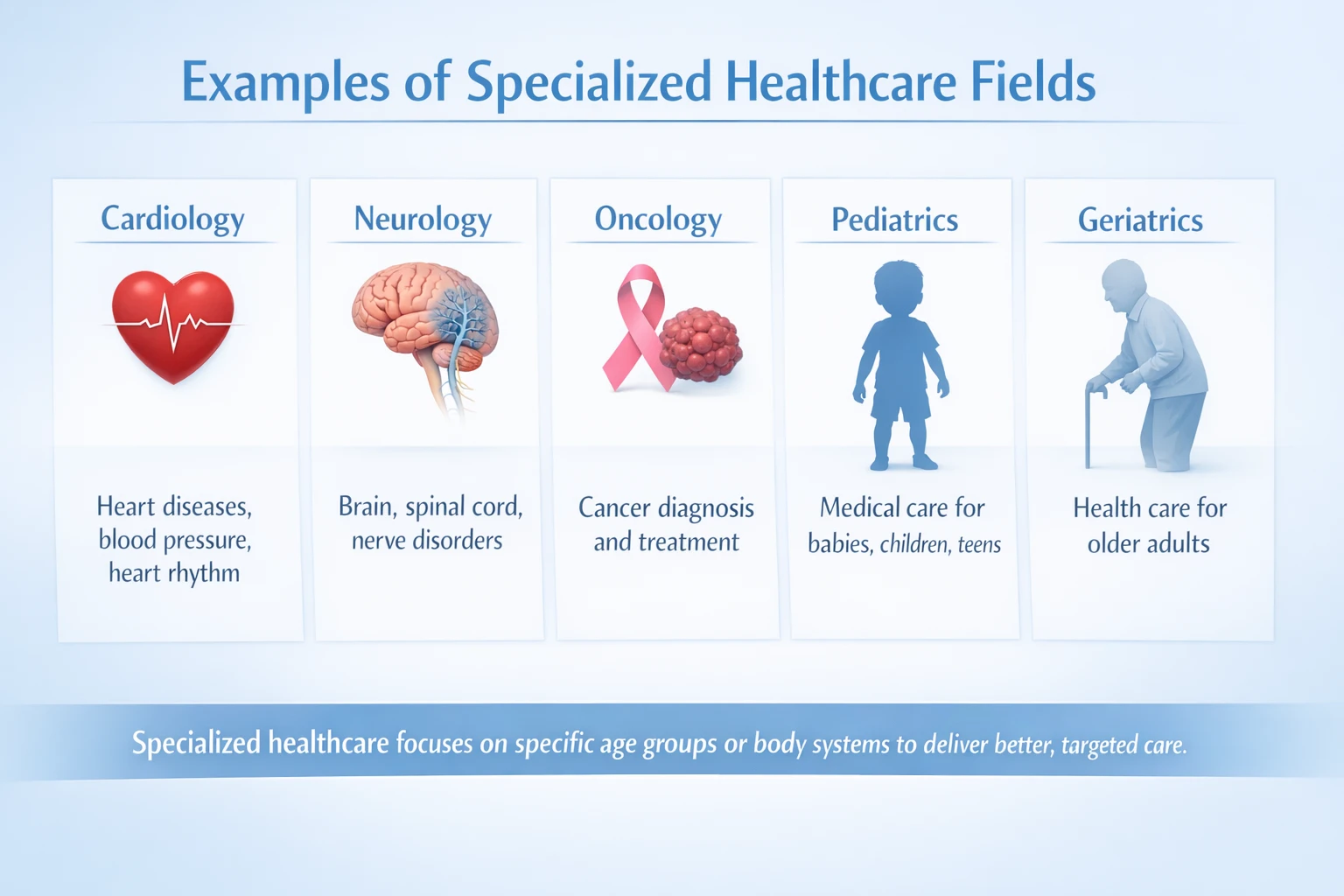
Cardiology
Cardiology is branch of medicine that cares for heart. It helps catch and treat complications like heart disease, heart failure, irregular heartbeat and high blood pressure. Heart doctors use tests such as echocardiograms, stress tests and catheter procedures to evaluate how the heart works. A special heart care includes timely checkups, guidance on a healthy lifestyle and treatments such as angioplasty or bypass surgery. This care helps prevent severe problems, take down heart-related deaths and helps people with heart conditions live healthier lives.
Neurology
Neurology is study of the brain, spinal cord and nerves. The neurologists help people with complications like Alzheimer’s, Parkinson’s, epilepsy, migraines and multiple sclerosis. Seeing to a neurologist early can slow the illness and improve life.
Key Points:
-
- The right diagnosis helps treat brain and nerve complications.
- Correct treatment helps control symptoms and improve everyday life.
- Special care like for epilepsy can decrease seizures a lot.
- Early neurological care helps people feel well and stay healthier.
Oncology
Oncology is part of medicine that deals with cancer. Oncologists help detect cancer early, treat it with drugs, radiation or surgery and monitor patients over time. The specialized cancer care has helped people survive by providing tailored treatment plans. Different doctors work together to offer the best care in cancer centers. This teamwork helps fight the disease more effectively. This makes it easier for patients to feel better and live a healthier life throughout treatment.
Pediatric Care
Children are not like adults; they want special medical care. Pediatric doctors support growth, development and the difficulties that occur only in children. They take care of babies, kids and teens to keep them healthy at every age.
Key Points:
-
- Help with growth and birth-related complications.
- Treat common childhood sicknesses.
- Care for newborns and teens.
- Safe and age-appropriate actions.
Good pediatric care helps children stay healthy and safe and grow strong.
Geriatrics
Geriatrics is the care for older people. The doctors Which are known as geriatricians help with conditions such as arthritis, memory loss, weak bones and difficulty moving. They look after long-term illnesses and support older adults in staying independent and doing their regular activities. This care keeps them healthy and safe or restores their quality of life and prevents to health problems. Geriatric care helps older adults live with dignity and feel well when they grow older.
How to Access Specialized Healthcare
Lots of people wonder how to see a specialist doctor. Typically, it starts with a visit to a regular doctor (primary care). The doctor assesses your condition and decides whether you need a specialist. If required, they can provide a referral to the appropriate specialist.
Knowing how the system works can save time and help you get care quicker. Just as it is vital to understand home care agencies vs. registries and their differences, it is equally important to know about your insurance coverage and how to make appointments. Being prepared with your medical history and a list of symptoms ensures you get the most out of your specialist visit.
You can find specialized healthcare in:
- Public and private hospitals with changed specialty departments
- Clinics that center on particular health problems
- Medical centers that propose advanced treatments and research-based care
- Private specialist offices for more private care
Understanding referrals, insurance rules and telemedicine can make it easier to get right doctor and get good care.
The Future of Specialized Healthcare
Technology is making particular healthcare better. AI helps doctors review medical images, predict how diseases might progress and make better decisions. Robots help with surgeries like making them more correct, faster and safer. Telemedicine allows patients to talk to specialists without traveling far. These tools make healthcare faster, safer and easier which helping doctors treat patients well and recover their overall health.
Personalized Medicine
Healthcare is becoming more personal. Doctors can now use genetic tests to make treatments only for you. Knowing a person’s DNA helps doctors offer better care and avoid bad side effects.
Key Points:
- Treatments are made to fit your DNA.
- Cancer treatments can target particular genes.
- Personal care is effective and has fewer side effects.
Personalized medicine helps create healthcare that is safer, more effective and focused on each person.
Multidisciplinary Approaches
Some medical problems are complex and need help from various types of doctors and health professionals. In a team, cardiologists, surgeons, nutritionists and physical therapists work together to care for patient. This way, each part of the patient’s health is examined in turn from identifying the problem, treating it, assisting recovery to offering advice for everyday life. Working as a team makes care better, safer and more thorough which helping patients stay healthy rather than just treating one symptom.
Final Words
To conclude that specialized healthcare is very important for treating severe or complex health problems. It offers patients the best treatments, modern tools and care tailored to their specific needs. Understanding “why is specialized healthcare important?” helps people understand why expert help can help recover health. Knowing to “how to access specialized healthcare” displays to patients how to get the right care effortlessly. Specialist doctors identify the problem, offer treatment and support patients over time which helping them stay healthier.
Patients can make informed choices or take charge of their health and get care they want when they need it by knowing about specific care and working with consistent doctors.